
Ultimate Real Estate Team Structure Blueprint for $5 Million + in GCI
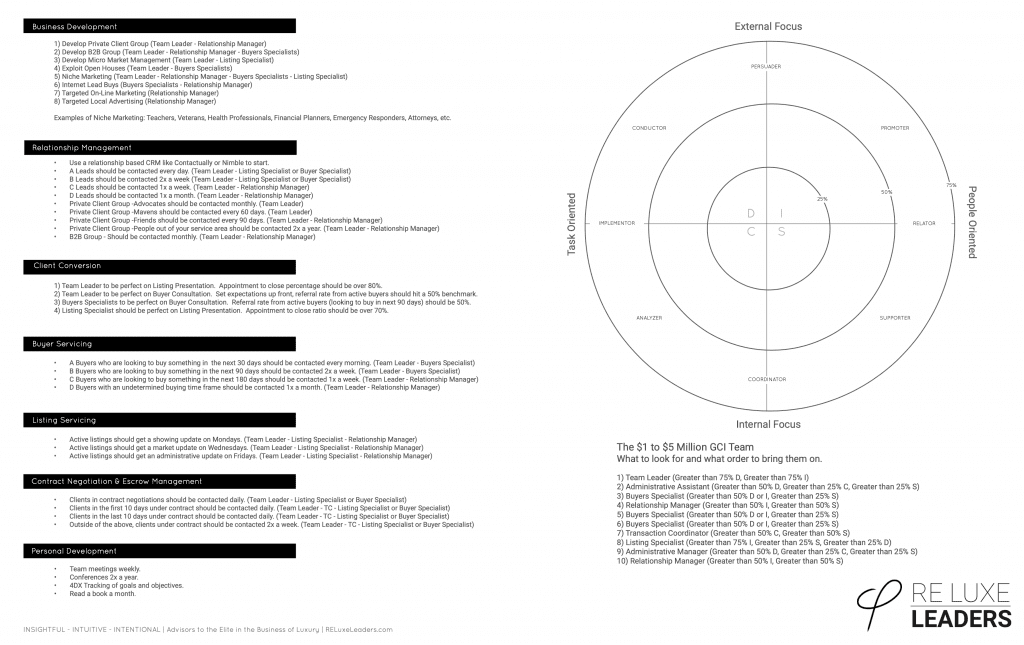
Ultimate Real Estate Team Structure Blueprint
A team structure should answer three practical questions before it adds people: why the team exists, whether the organization has enough reserves to support the work and which systems are already in place. The blueprint below turns those questions into a decision sequence without promising a particular revenue result.
When Should Someone Start A Team?
Starting a team changes responsibilities, cash requirements and the way clients experience the service. Answer the three questions below in writing before committing to a structure.
First, What Is Your Motivation For Starting A Team?
Name the problem the team is meant to solve. Is the goal to protect client service, create capacity, develop people or make a different kind of practice possible? A clear motivation helps you decide what belongs in the first version of the team.
Second, Do You Have Enough In Reserves To Do It Right?
Second, Do You Have Enough In Reserves To Do It Right?
Model the costs, timing and contingencies before hiring. Include the time required to train, supervise and correct the work while the structure is new. If the reserve is uncertain, stage the change and get qualified financial advice before taking on a fixed obligation.
Third, What Systems Do You Already Have In Place?
Third, What Systems Do You Already Have In Place?
List the routines that already support lead follow-up, listing service, buyer service, negotiation, transactions and team meetings. A new role should remove a real bottleneck or improve a defined experience; it should not hide an unclear process.
The Importance Of The Right Real Estate Team Structure In Expanding Real Estate Teams Profitably
There is no single team model for every market or client mix. Start with the service promise, map the decisions and assign ownership for each recurring responsibility. Then review the handoffs so the client knows who is accountable at each stage.
A Real Estate Team Consultant’s Tip – The Importance Of The Right Temperament
Temperament affects how people communicate, make decisions and respond under pressure. Use interviews, references and observed work to understand fit; do not reduce a person to a label. Pair the strengths of the team with clear expectations and coaching.
The Importance Of The Right Temperament
Define the behaviors the role needs: listening, follow-through, discretion, initiative or careful documentation. Then evaluate those behaviors in the context of the actual work and the support the team can provide.
The Importance Of The Right Timing
Timing depends on readiness, capacity and the client experience you can sustain. Add one responsibility at a time, review the effect and adjust the structure before expanding it further.
Here is the overview of the Real Estate Team Structure
Use the Ultimate Real Estate Team Structure Blueprint PDF as a worksheet for roles, responsibilities and measures. The useful output is a structure that people can understand and operate, with the measures chosen for the work rather than borrowed without context.
Download the Ultimate Real Estate Team Structure Blueprint PDF
Keep the completed blueprint with the operating plan and revisit it after the team has enough experience to show which handoffs work. Related reading includes the sales associate hiring process and professional brand positioning.
For an outside perspective on the assessment language used in the source material, see the DISC overview; treat any framework as a conversation aid rather than a hiring decision.
Request a complimentary one-hour conversation with a senior advisor who is an experienced operator. Talk through your next move.