
Unreasonable Hospitality Summary: Luxury Real Estate Lessons
What Is the Unreasonable Hospitality Summary for Luxury Real Estate?
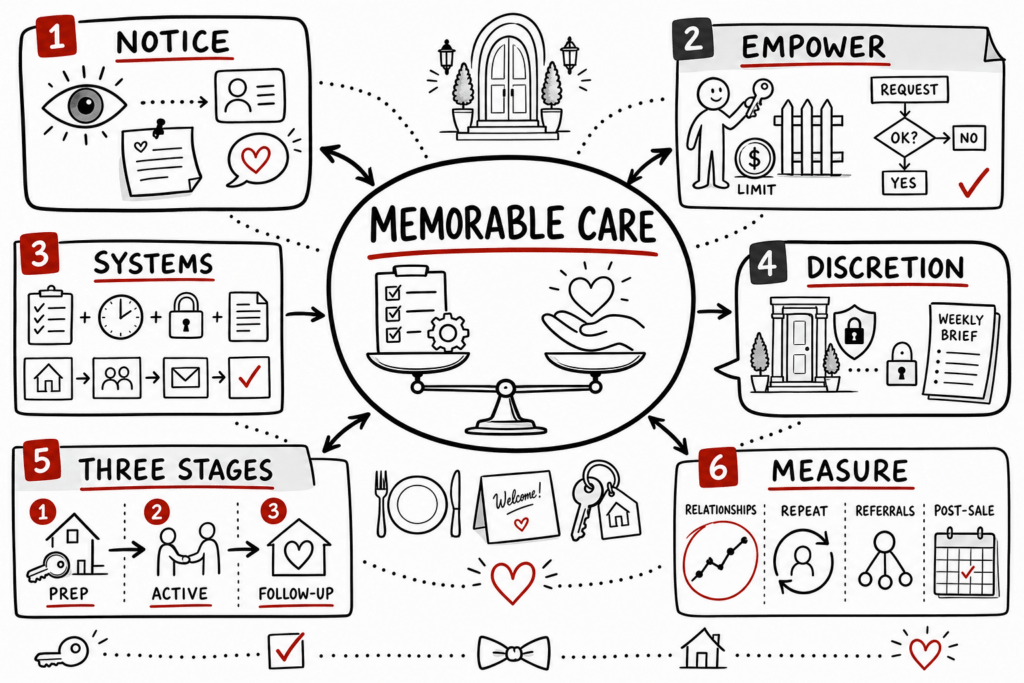
Unreasonable Hospitality by Will Guidara argues that operational excellence earns trust while thoughtful service makes an experience memorable. For luxury real estate, the useful translation is not extravagant gifting. It is attention to personal context, discretion, reliable execution, and a team empowered to make appropriate choices within clear boundaries.
A property, image, or transaction process can be copied. A client experience built from careful observation and dependable follow-through is harder to replicate. The book is a leadership reference for teams willing to systemize personalization, not a literal real-estate playbook or a promise of retention or referrals.
Core Idea
Guidara treats hospitality as a leadership practice. Leaders establish standards, give people permission to use judgment, and create systems that help teams notice what matters to a guest. “Unreasonable” does not mean reckless spending or agreeing to every request. It means being unusually thoughtful about how a person feels during an interaction.
In a high-touch property matter, clients may value privacy, a concise briefing, a coordinated inspection, or a schedule built around family obligations more than a generic closing gift. The distinction is important: warmth without precision feels careless, while precision without warmth feels clinical.
Best Takeaways
1. Personalization Starts With Attention, Not Gifts
Observe before acting. A preferred communication channel, travel schedule, decision-maker, security concern, or design priority may reveal a relevant service opportunity. The value is relevance, not spectacle, and the client’s permission and privacy boundaries govern the response.
2. Teams Need Permission and Boundaries
Client-facing staff cannot deliver responsive service when every small decision waits for executive approval. Give teams authority inside defined spending, privacy, documentation, fair-housing, and escalation rules. Empowerment without controls creates inconsistency; controls without empowerment create delay.
3. Memorable Moments Should Rest on Excellent Systems
A thoughtful moment works because the operation beneath it is reliable: documents are accurate, updates are predictable, information is handled securely, vendors are coordinated, and each next step has an owner. The private-client program provides a companion lens for that high-touch discipline.
4. Hospitality Can Support Retention and Referrals
Retention rarely rests on one dramatic gesture. It grows from repeated evidence that an adviser remembers context, protects time, and remains useful after the transaction. Track repeat engagements, qualified introductions, response quality, and meaningful post-closing interactions only when definitions are clear. Those measures show whether the service system is strengthening relationships or merely adding cost.
Who Should Read It
The book fits brokerage owners, luxury agents, team leaders, client-experience executives, and operations professionals responsible for high-touch service. It is especially useful when inventory, photography, marketing, and transaction support are becoming similar across competitors. Solo advisers can use the ideas, but the greatest value comes from building a team that notices and responds consistently.
Where It Falls Short
Restaurant service happens in a concentrated environment with immediate feedback; a property transaction can unfold over months and involve legal, financial, security, and confidentiality constraints. The book’s stories can also tempt readers toward theatrical gestures. A memorable moment cannot compensate for weak negotiation, poor due diligence, or careless communication. Personalization must be discreet and permission-based.
The book gives less attention to margin analysis. Leaders need to set budgets, define the purpose of each experience initiative, and stop practices that create activity without better client confidence or relationship evidence.
How to Apply It
Build a Three-Stage Hospitality Map
Map pre-transaction, active transaction, and post-sale. For each phase, record likely questions, emotional pressure points, operational friction, and opportunities to add relevant value.
- Pre-transaction: capture preferences, decision criteria, privacy requirements, stakeholders, and communication cadence.
- Active transaction: provide concise status briefings, anticipate approvals, coordinate specialists, and reduce unnecessary decisions.
- Post-sale: maintain a useful relationship through trusted introductions, property intelligence, vendor oversight, or discreet milestone recognition.
Create a Client Intelligence Habit
Use a structured CRM field for appropriate service preferences and meaningful context. Record only what is useful, securely handled, and consistent with privacy obligations. The aim is continuity, not surveillance.
Review One Opportunity Each Week
Discuss one moment when a team member recognized an unstated need. Ask what signal was noticed, whether the response respected boundaries, and whether the idea can become repeatable without becoming a script.
Measure Relationship Outcomes
Balance emotional intelligence with commercial discipline. Review repeat engagements, introductions, response times, and post-sale usefulness against a defined baseline. Keep the practices that improve the relationship and retire those that create cost without value.