
Indistractable Summary & Review: Focus Tactics for Luxury Leaders
What Is the Indistractable Summary for Luxury Real Estate Leaders?
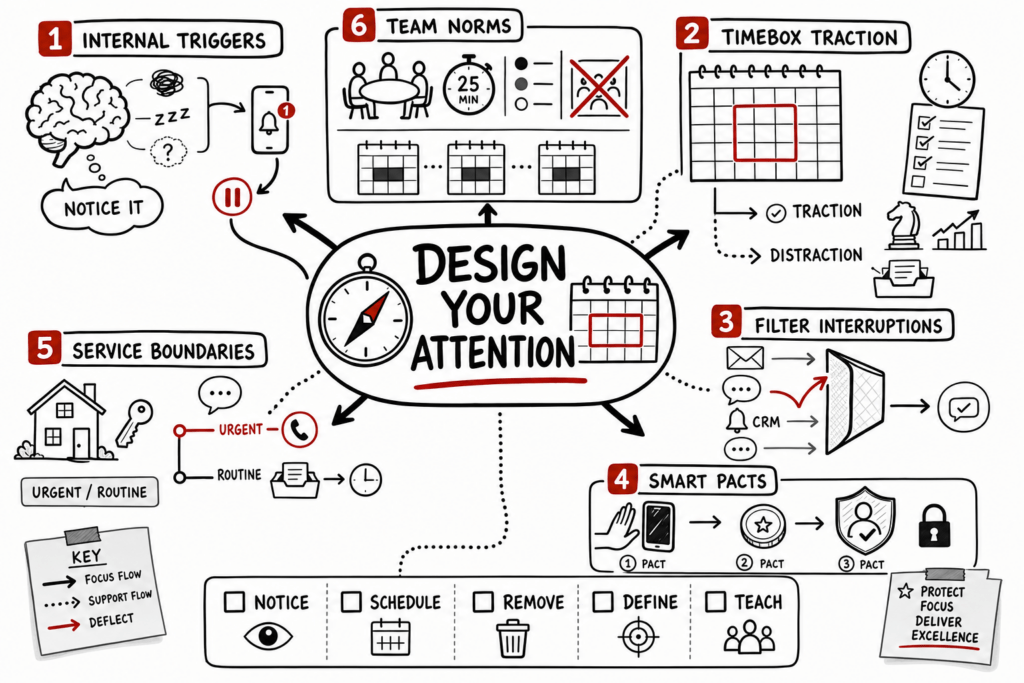
Nir Eyal’s Indistractable treats attention as something people can design. Its practical value for a luxury real estate leader is the connection between a calendar, the discomfort that precedes distraction, external interruptions, and the commitments that make a priority easier to protect.
“Traction” is an action that moves toward what was planned; “distraction” moves away from it. Email may be traction during a scheduled response block and distraction during negotiation preparation. The label depends on intent, not the tool.
Core Idea: Distraction Starts Before the Notification
External triggers such as texts, CRM alerts, chat messages, and news feeds matter, but they often meet an internal trigger first: boredom, uncertainty, anxiety, frustration, or the wish to avoid difficult work. Turning off notifications can reduce noise without answering why a leader reaches for the inbox during a strategy block.
The useful question is what feeling appeared immediately before the escape. Naming that feeling creates a chance to choose a different response. The book also distinguishes traction from distraction so that apparently productive activity can be examined against the work that was actually planned.
Readers can compare this review with the official Indistractable overview and the book information from BenBella Books.
Best Takeaways: The Indistractable Key Takeaways That Hold Up
1. Schedule Values, Not Just Tasks
A to-do list records intention without assigning capacity. Time-boxing forces a decision about when market analysis, offer strategy, recruiting, coaching, and brand work will happen. The calendar becomes an operating plan, and adding a new priority requires an explicit trade-off.
2. Diagnose Internal Triggers Without Self-Judgment
Leaders may check dashboards or messages because a quiet listing or unresolved negotiation feels uncomfortable. Recognizing the pattern is more useful than demanding perfect discipline. The aim is to see the trigger early enough to choose a response that serves the planned work.
3. Hack Back External Triggers
Notifications, meetings, and open channels should earn the right to interrupt. Batch CRM alerts, remove nonessential badges, set meeting defaults that fit the team, and define which issues justify an immediate call. Accessibility needs rules; reliable service does not require continuous interruption.
4. Use Pacts Carefully
The book describes effort, price, and identity pacts that make distraction less convenient or commitment more meaningful. An effort pact could put a phone outside the room during a strategy block. These tools work best after the calendar and triggers have been addressed; a penalty cannot repair an impossible schedule.
How to Apply It in an Always-On Luxury Sales Environment
The lesson is not to become unavailable. It is to design access. Give active clients a defined urgent channel, batch lower-stakes email and internal messages, and state when routine updates will arrive. A precise service standard can feel more premium than erratic always-on availability.
Protect a recurring block for work that improves decisions before clients see the result: reviewing comparable sales, preparing negotiation scenarios, auditing pipeline risk, or developing useful market education. Close unnecessary tabs, move the phone, and identify the internal trigger most likely to break concentration.
Team norms matter. Leaders cannot ask for focus while sending nonurgent messages at all hours. Set response expectations, define escalation rules, circulate agendas, and cancel meetings with no decision to make. Shared focus blocks help silence read as planned work rather than disengagement.
Where It Falls Short
Time-boxing, notification control, and commitment devices are familiar ideas. The book’s value is their organization around internal triggers and intentional action, but reading the framework will not fix a culture that rewards instant replies or treats every client request as equally urgent.
Real estate also includes emergencies, shifting deal conditions, and clients whose expectations cannot be scheduled perfectly. The goal is a calendar with protected priorities, buffers, and conscious exceptions rather than rigid personal control.
Who Should Read It?
Indistractable fits founders, brokerage leaders, team leads, advisors, and operators who know what matters but repeatedly lose execution time to digital noise. It is especially relevant when high-emotion pipelines make distracted preparation costly.
Skip it if you want a single app or a novel theory that removes the need for practice. Read it if you are willing to change calendar design, communication norms, and personal habits together.
How to Apply the Indistractable Summary This Week
- Notice one distraction: record the feeling that preceded an unplanned refresh or scroll.
- Schedule one traction block: reserve time for the highest-leverage leadership or client work.
- Remove one external trigger: batch an alert, shorten a recurring meeting, or disable a nonessential notification.
- Create one service boundary: define an urgent client channel and a clear routine response window.
- Teach one shared phrase: ask whether an activity is traction or distraction relative to the calendar.
The most useful Indistractable lesson is practical: understand discomfort, plan time, redesign interruptions, and support commitments with workable guardrails.