
The Art of Spending Money Summary for Luxury Real Estate Leaders
What is The Art of Spending Money summary for real estate leaders?
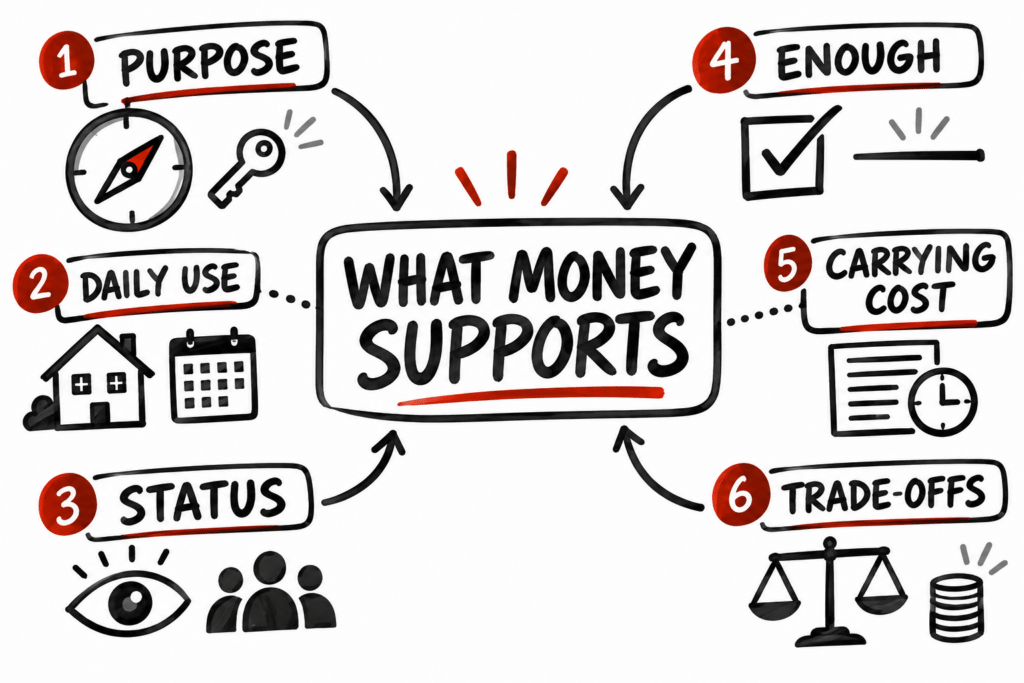
The Art of Spending Money summary for luxury real estate principals, brokers, and family-office advisors is that spending deserves the same scrutiny as wealth building: a property can buy daily use, time, status, or an asset, and confusing those purposes can lead to an expensive mismatch. Morgan Housel’s The Art of Spending Money, subtitled Simple Choices for a Richer Life, invites a useful reading through that lens. Here, “enough” is a decision rule: the point at which additional cost no longer supports a purpose the buyer values. For example, a second home with $400,000 in annual carrying costs and 20 nights of annual use costs $20,000 per night before financing, taxes, or changes in property value. That is a usage comparison, not a measure of investment return. Readers who want language for lifestyle and financial trade-offs may find the book useful; those expecting a property valuation model or entirely unfamiliar behavioral principles after The Psychology of Money should temper their expectations.
Who Should Read It
This is a useful reading choice for leaders whose clients do not need help affording a property but do need clarity about what the purchase is meant to accomplish. A principal advising on a second home, a broker managing a trophy listing, or a family-office advisor weighing lifestyle costs against liquidity can all use the spending lens to ask better questions.
It is less useful as a technical guide. Readers looking for tax structuring, underwriting formulas, portfolio allocation, or market-specific advice will need other sources and qualified advisors. The value here is in the conversation around a decision, not a substitute for the analysis behind it.
Core Idea: What Is the Money For?
Morgan Housel is known to many readers through The Psychology of Money, which examines behavior around wealth. A useful way to approach The Art of Spending Money is to move that behavioral question to the spending side: what does an outflow actually support in the buyer’s life?
That is a reading angle, not a chapter-by-chapter claim about the book. It is particularly relevant to property because a home can be an asset and a lifestyle purchase at the same time. The mistake is not buying for pleasure or prestige. It is using one rationale to avoid examining another.
A buyer may describe a highly customized estate as an investment while choosing features primarily for personal use. Another may call a purchase practical when the neighborhood’s social standing is part of its appeal. Neither motive is inherently wrong. Each deserves a different test.
Best Takeaways: The Art of Spending Money for real estate leaders
1. Separate use from display
Start by asking what the property must do. A primary residence may need to support family routines and privacy. A second home may be about access to a place and time together. A trophy property may carry a reputational or collecting motive alongside its utility.
Then evaluate the purchase against its stated purpose. If a client wants more uninterrupted family time, distance, staffing, and frequency of visits matter as much as the view. If status matters, acknowledge it without pretending that every premium paid will be recovered at resale.
2. Name the comparison set
Clients may measure a home against a peer’s property, a family expectation, or what they believe a particular address should signal. Ask whose opinion matters and why. The answer can reveal whether the requirement is durable or tied to an audience that may change.
Housel’s established distinction between visible spending and wealth that remains unseen is useful context here. A large house shows that money was spent; it does not, by itself, show what financial flexibility remains. That distinction comes from his broader work and should not be mistaken for a specific chapter summary.
3. Define enough before the upgrade
Without a stopping rule, each improvement can make the next one feel necessary. Before negotiating or renovating, ask which features are essential, which are desirable, and which mainly respond to comparison. The client can still choose the more expensive option, but the choice becomes deliberate.
Include the life after closing. Staffing, maintenance, security, travel, and coordination can outlast the initial excitement. These obligations are not necessarily reasons to walk away; they are part of what the client is buying.
Where It Falls Short
In this The Art of Spending Money book review, the main qualification is about fit. Behavioral framing can make a complex decision easier to discuss, but it cannot tell a family how to price a property, structure ownership, or resolve competing investment objectives. A memorable idea is not due diligence.
There is also a familiarity risk. Readers who already understand Housel’s argument that money decisions are shaped by behavior may find the spending lens more of a useful extension than a revelation. For someone hoping for a wholly new theory of wealth, that distinction matters.
Finally, “enough” can be too neat if it ignores family dynamics. Partners may want different things from the same property; privacy, proximity, and legacy can conflict. A good advisor should surface those differences rather than present restraint as the only sophisticated answer.
The Art of Spending Money vs The Psychology of Money
The practical comparison is where the reader puts the emphasis. The Psychology of Money is associated with how people think and behave around wealth, including the distinction between looking wealthy and retaining wealth. The Art of Spending Money offers a spending-centered frame: what should money support once the decision is to use it?
There is overlap in the behavioral territory. That may be a strength for a reader who wants a familiar lens applied to a different decision, or a limitation for one expecting a complete departure. Treat this comparison as a guide to reader fit, not a claim that either book addresses only one side of money.
How to Apply It
In the next property conversation, begin with the operating decision: “What do you most want this property to make possible?” Then ask what would make the purchase feel worthwhile three years after closing. Those questions invite use, control, investment expectations, and status into the same conversation without treating any of them as a confession.
Next, put the recurring obligations beside the intended use. Use realistic estimates from the client’s advisors, and distinguish cash costs from potential appreciation or loss. If the property will be used infrequently, calculate carrying cost per expected night as one comparison—not as a verdict on whether the purchase is justified.
Finally, agree on the trade-offs before looking at the next upgrade. Which features can change without undermining the purpose? What level of illiquidity or administrative work is acceptable? The answers give the client a way to judge alternatives without relying solely on excitement at a showing.
Apply the same discipline inside the firm
Office space, marketing, and personal presentation can all serve a business purpose. They can also become status costs dressed up as client expectations. Before increasing spend, name the intended result: better client access, stronger visibility with a defined audience, or a more effective working environment. If the benefit is mainly image, say so and decide whether it is worth the cost.
Is The Art of Spending Money worth reading?
Yes, if you want a concise behavioral lens for discussing what wealth is meant to support. It is a reasonable follow-on to The Psychology of Money for a reader interested in spending decisions, provided you do not expect technical property guidance or an entirely separate set of behavioral principles. The most useful outcome is not a rule against expensive purchases; it is a clearer reason for making them.
For an established real estate leader weighing where business spending supports the work and where it merely supports the image, that distinction is worth discussing.