
Elon Musk Key Takeaways for Luxury Real-estate Leaders
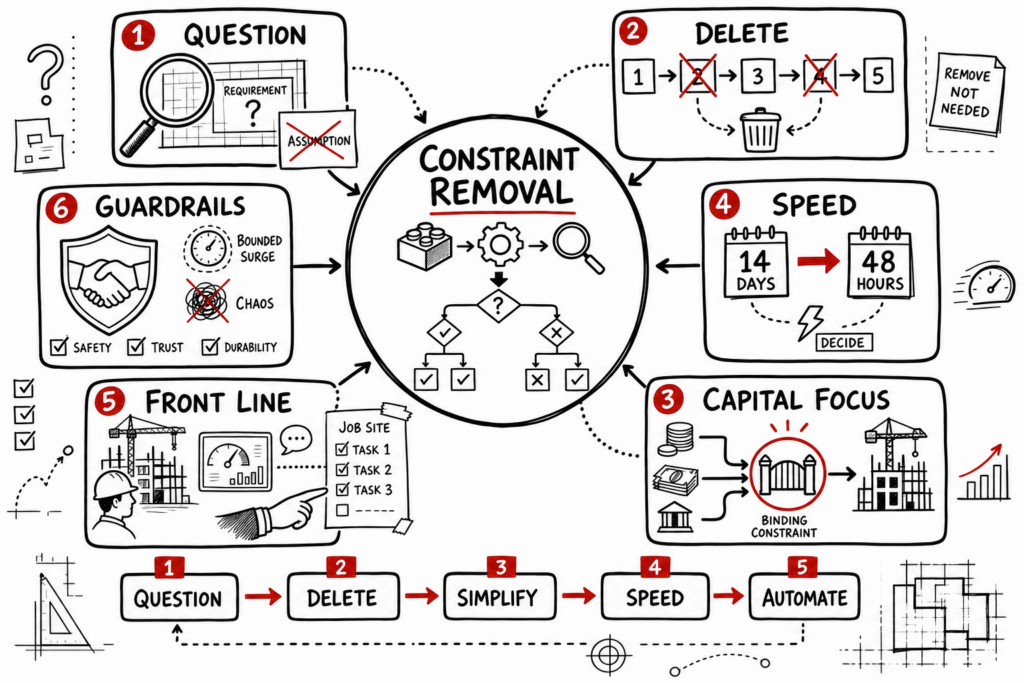
Walter Isaacson’s Elon Musk is most useful to a luxury real-estate leader as a case study in operating choices and their trade-offs. It offers ideas about constraints, speed, concentration and direct observation. It does not provide a universal management model, and studying an operating habit does not require copying the behavior around it.
What Are the Elon Musk Key Takeaways for Luxury Real-Estate Leaders?
The selective lessons are to question inherited requirements, look at the place where work is delayed, concentrate scarce attention on the binding constraint, build fast feedback and keep urgency bounded. In a property business, those ideas can help a leader review an approval path, a development milestone or a client handoff without turning every decision into an emergency.
Book Snapshot: Why Executives Are Still Talking About It
Isaacson’s biography follows Musk across aerospace, electric vehicles, energy, artificial intelligence, infrastructure and media. It is an account of decisions, conflicts and consequences rather than a polished leadership manual. The publisher’s page is the appropriate place to confirm the edition and book details. Isaacson’s site provides author context.
Core Idea: An Operating System Built Around Constraint Removal
The book repeatedly examines what happens when a leader challenges an inherited requirement and returns to the underlying material, time, cost or technical constraint. For a real-estate operator, that means separating a genuine code, covenant or contractual requirement from a habit that no longer serves the property or client.
Best Takeaways: Elon Musk Key Takeaways That Translate
1. Use the five-step algorithm in the correct order
Question the requirement, remove what is unnecessary, simplify what remains, shorten the cycle and automate last. In a monthly project review, ask who owns each step and what risk it controls before buying another tool.
2. Go where the work is happening
Reports summarize reality but do not replace observation. A leader can walk a job site, sit in a sales review or listen to the handoff where information is lost. The purpose is to learn where the signal changes, then improve the decision path.
3. Sequence capital instead of spreading it evenly
Identify the issue that currently controls schedule, liquidity or revenue and decide whether it deserves concentrated resources. Concentration still needs downside cases, liquidity reserves and covenant awareness.
4. Design teams for learning speed
Shorter reporting lines, named decision owners and explicit escalation thresholds help a team learn without making every decision a founder decision. Technical fluency is useful when it improves questions and judgment, not when it becomes theater.
5. Treat urgency as a tool, not a permanent climate
A bounded surge can focus a launch, approval or closing. Permanent crisis mode weakens trust, retention and judgment. Define when the surge starts, what decision it serves and when the team returns to a sustainable cadence.
Where It Falls Short
A biography can show patterns without giving a reader a tested implementation sequence. Personality-driven intensity can also make damaging behavior look inseparable from ambitious execution. Luxury real estate depends on relationships with owners, families, lenders, builders and advisors. A faster internal decision that damages those relationships may destroy more value than it creates.
How to Apply It Without Importing the Damage
- Audit one delayed project and list every approval, handoff and meeting.
- Measure the time from a material issue being raised to an accountable decision.
- Name the binding constraint for each active project for the next 30 days.
- Use a short, defined surge around a milestone, then restore normal operating rhythm.
- Set behavioral guardrails that permit direct debate without humiliation or manufactured emergencies.
Who Should Read It?
The book suits founders, developers, investors and operating executives managing complex, capital-intensive work. It is a fit for readers who want a detailed case study and are willing to separate useful operating questions from behavior they should not copy. It is less useful for anyone seeking a tidy checklist or a short-term market forecast.