
Marketing and Advertising Budget
Marketing and Advertising Budget
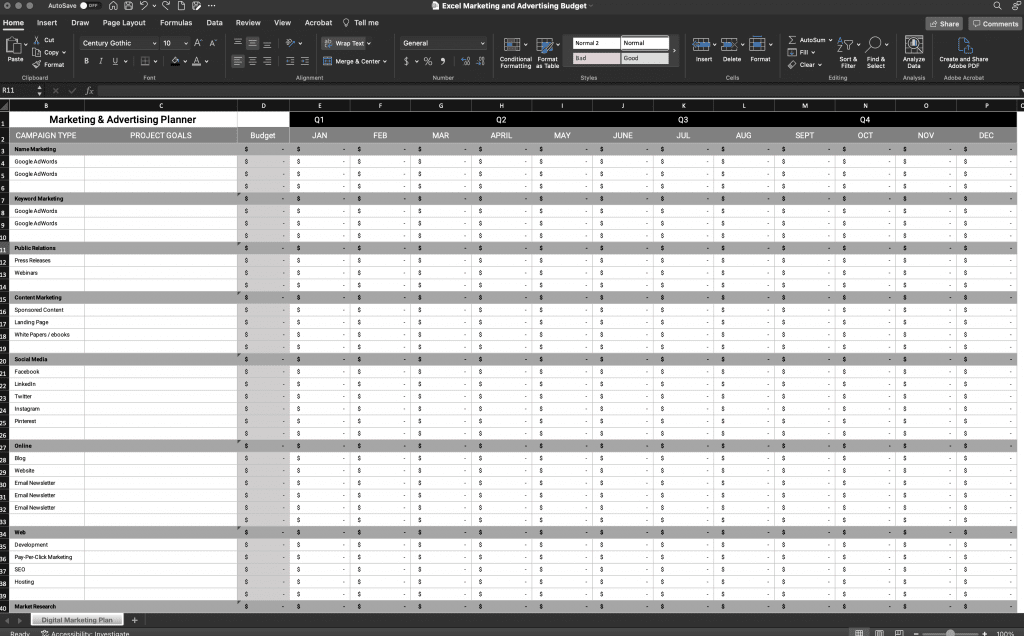
A marketing budget is easier to use when each line has a purpose, an owner and a time period. The worksheet for this article organizes planned spend by category and month so a team can compare intentions with what it actually commits.
Our Recommended Categories
Begin with the categories that fit the business: name marketing, keyword marketing, public relations, content marketing, social media, online and web costs, and market research. Add the project goal beside each line, then define the audience and geography before assigning a budget.
For search presence, choose terms that reflect the brand, service area and prospective client. For public relations, decide which audience and story the work is meant to reach. Content and social plans should have a useful subject and a person responsible for the conversation that follows. If direct mail is part of the plan, document the route, format and cost; the USPS Every Door Direct Mail resource can help explain the available service.
Review each category against the same question: what decision will this spend support, and what evidence will we record? A recognizable name or a polished campaign is not a substitute for a clear goal and a review date.
Download the Excel Marketing and Advertising Budget File
Use the workbook’s monthly columns to assign planned amounts and the project-goal field to explain why each line exists. Keep the original assumption, the person responsible and the review date with the working copy. When a plan changes, record the reason so a later review can distinguish a deliberate adjustment from an untracked overrun.
Request a complimentary one-hour conversation with a senior advisor who is an experienced operator. Talk through your next move.