
Nexus Harari Summary: Ai, Power, and Leadership Strategy
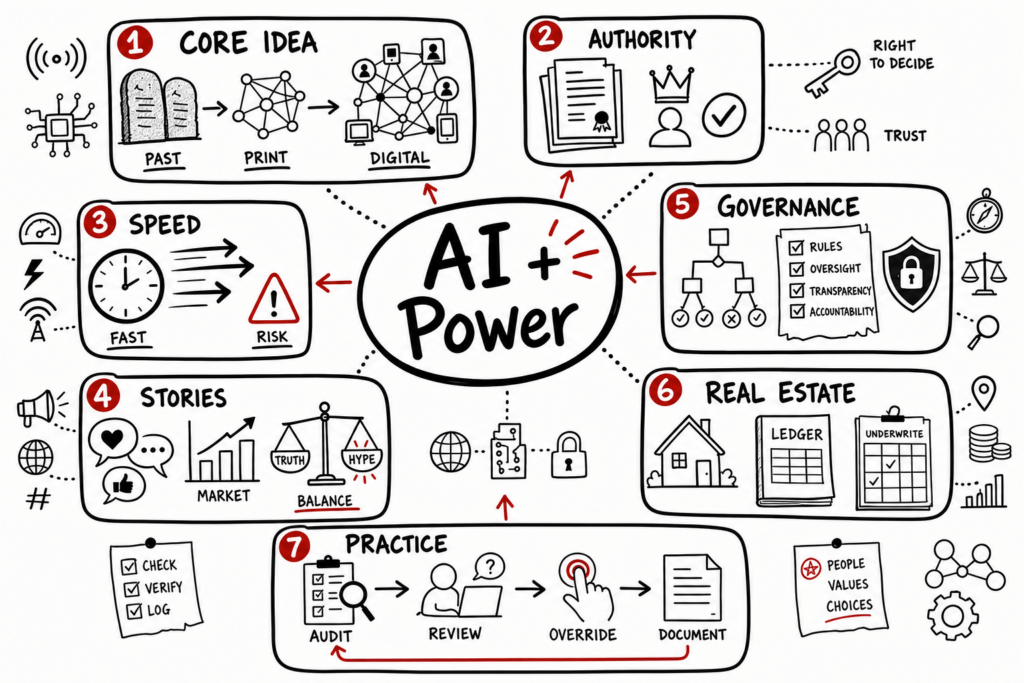
What is the Nexus Harari summary for leaders?
Nexus by Yuval Noah Harari considers how information networks, stories and institutions organize power. For a real-estate leader, its useful questions concern authority, accountability, trust and the systems that turn information into decisions.
Book Context and Author Background
The book moves across historical and technological examples to examine networks and power. It is a broad argument, not a market-specific operating manual or a forecast that removes human responsibility. See the author’s book page and publisher context.
Who Should Read It
The book fits leaders thinking about AI, data, institutional trust or communication. It is less useful as a detailed implementation plan for a brokerage or a substitute for current technical, legal or governance advice.
Core Idea
Information systems gain authority through the people, rules and institutions that use them. Leaders should ask who can decide, who can challenge an output, what is logged and what happens when the story or data is wrong.
Best Takeaways
1. Information networks create authority
A record becomes influential when people trust its source and process. State provenance, uncertainty and the person accountable for use.
2. Speed without accountability is not strategy
Faster decisions still need review, override and correction. A tool that moves quickly without a responsible owner increases risk.
3. Stories still organize markets
A market narrative can clarify or distort. Separate evidence, interpretation and invitation so a reader can make an informed choice.
4. Governance becomes a competitive advantage
Clear rules, oversight and correction protect trust. Governance should support useful action rather than burying the team in ritual.
Where It Falls Short
A broad history can make distinct technologies or institutions feel more alike than they are. Test the analogy against current evidence and the actual decision in front of the firm.
Nexus Key Takeaways for Strategy-Focused Real Estate Leaders
Use the book to ask better questions about trust, authority and information flow. Do not turn its concepts into a branded framework that readers cannot inspect.
How to Apply It
Map one important decision: its inputs, source, owner, review, override and record. Then ask which values and people are missing from the system.
Nexus Reader Fit: Final Verdict
Nexus is useful for leaders who want to think about information as an institution of power. Its practical value is a stronger habit of checking source, authority and accountability.
You can request a complimentary one-hour conversation with a senior advisor who is an experienced operator. Talk through your next move when your information systems need more trust, governance and human judgment.