
Revenge of the Tipping Point Summary: Business Influence Briefing
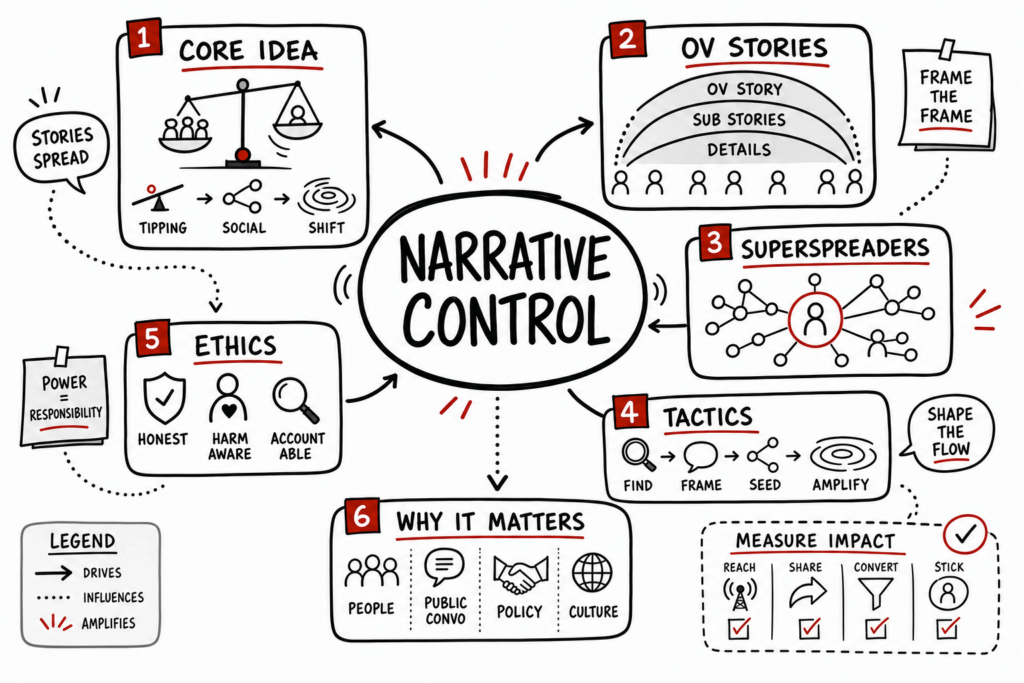
What is the Revenge of the Tipping Point summary for leaders?
Revenge of the Tipping Point by Malcolm Gladwell examines how environments, groups, stories and influential participants shape social change. For a business leader, the useful lesson is to study how a message travels and what responsibility comes with helping it travel.
This review describes a framework for questions. It does not verify every example in the book or promise that a communication tactic will create adoption.
Book Overview: The Tipping Point Sequel Summary
The book revisits tipping-point ideas through overstories, superspreaders and the conditions that make an idea or behavior move. It is useful for a leader examining context and incentives, but it can be overextended if every social pattern is treated as a controllable campaign.
For publisher context, see the Little, Brown book page and Gladwell Books.
Who Should Read It
The book may help leaders working on public communication, culture, product adoption or community trust. It is less useful as a substitute for audience research, consent, legal review or a specific go-to-market plan.
Core Idea: Overstories, Superspreaders and Engineered Reality
Influence is shaped by the setting around a message, the people who carry it and the story that makes it legible. Leaders should ask what context they are creating, who benefits and what harms could follow from amplification.
Best Takeaways: Revenge of the Tipping Point Key Takeaways
1. Influence is environmental, not just personal
Change the conditions around a decision, not only the words used to persuade. A clear process, trusted setting and relevant evidence can matter as much as a polished message.
2. Narrative control is a leadership function
Leaders shape what a team notices and repeats. State the frame, acknowledge uncertainty and give people a way to challenge the story before it becomes a decision rule.
3. Virality without ethics becomes manipulation
Reach is not a moral measure. Do not use private information, fear or social pressure to manufacture urgency. Ask whether the audience can understand the claim and choose freely.
Revenge of the Tipping Point Strategy Lessons for Business
For a real-estate team, examine how a market story travels through clients, partners, media and internal leaders. Separate attention from a qualified decision and record what evidence shows that the message was understood.
Where It Falls Short
Social systems are difficult to reduce to a repeatable formula. A narrative can spread while remaining wrong, harmful or irrelevant to the intended decision. Local context and independent evidence still matter.
How to Apply It
Run a superspreader map
List the people, settings and channels that can carry a message. Note what each group needs, what it can verify and what risks arise when the message changes in transit.
Define the overstory you want to own
Write the larger frame around the campaign or operating change. Test whether the frame is accurate, useful and consistent with the behavior the organization can actually support.
Separate attention from adoption
Track reach, meaningful response, qualified conversation and sustained use separately. A share or view is not evidence that a person accepted or benefited from the idea.
Build ethical contagion into operations
Make truthfulness, consent, correction and accountability part of the distribution process. Give someone authority to slow or stop a message that could mislead or harm.
Final Verdict
Revenge of the Tipping Point is useful for leaders who want to understand influence as a social environment rather than a single persuasive act. Its best use is a disciplined set of questions about context, evidence and responsibility.
You can request a complimentary one-hour conversation with a senior advisor who is an experienced operator. Talk through your next move when influence needs a clearer frame and a stronger ethical boundary.