
Technofeudalism Summary: Platform Power and Real Estate Strategy
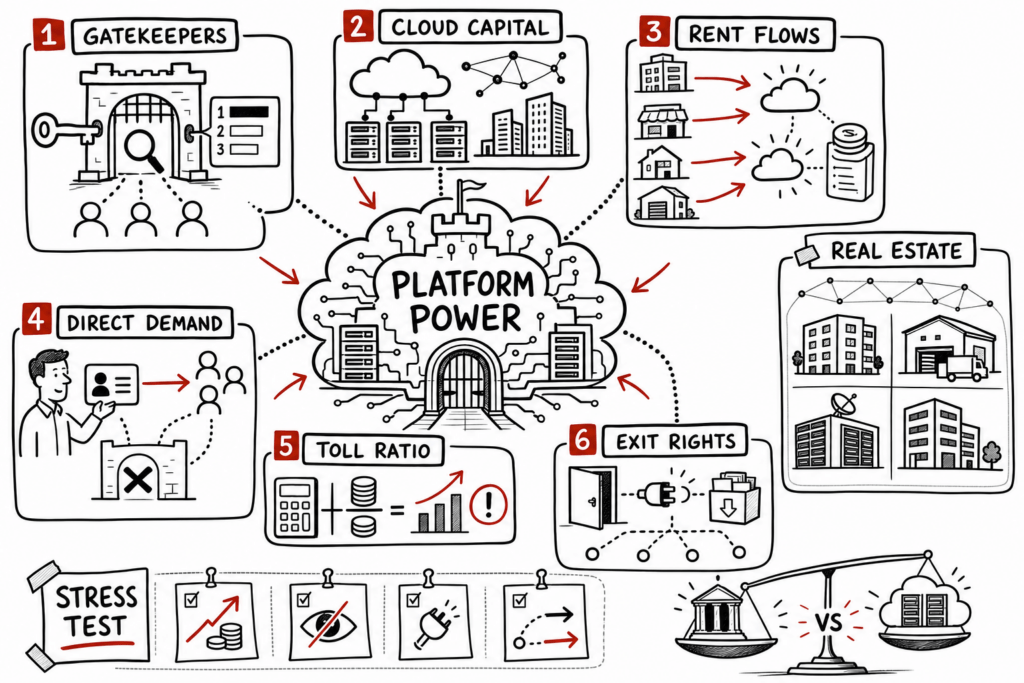
What Is the Technofeudalism Summary for Business Leaders?
Yanis Varoufakis’s Technofeudalism: What Killed Capitalism argues that dominant digital platforms have changed the underlying organization of economic power. For a brokerage leader, its useful provocation is to examine who controls customer access and the terms of participation. That question is worth asking without treating the book’s larger thesis as settled economics.
Core Idea: Cloud Capital Explained
Varoufakis uses “cloud capital” to describe the digital systems through which platform owners shape activity and extract value. In his account, privately controlled platforms and rents have displaced markets and profits, while users’ everyday participation adds to the platforms’ power. This is his interpretation of the economic order, not a finding about every software vendor.
The publisher’s US edition, issued by Melville House in February 2024, sets out that argument. The distinction that matters for this review is between buying a useful service and becoming dependent on an intermediary’s continuing permission to reach customers.
Why Yanis Varoufakis’s Lens Matters
The author is an economist and former Greek finance minister. His book brings a political-economic argument to technology, ownership and power. Read it as a position to examine, rather than a neutral vendor-selection manual. A compelling account of dependence still needs business-specific evidence before it changes a contract or investment decision.
Best Takeaways: Technofeudalism Key Takeaways
The following are RELL’s applications for operators. They are questions prompted by the book, not a proprietary method attributed to Varoufakis.
1. Control of demand can matter more than ownership of supply
Owning inventory or delivering a good service may not secure access to the next customer. Identify where discovery, ranking, identity, payment or communication depends on a platform. Then distinguish access the business can maintain directly from access governed by a supplier’s terms.
2. Convenience can conceal dependency
Convenience has value. A portal or operating platform can save work and make a service easier to find. Compare those benefits with fees, restrictions and the effort required to leave. High usage is not itself a failure; dependence becomes a management question when the alternatives or consequences are poorly understood.
3. Infrastructure ownership shapes the rules
Separate the gateways. A listing portal, advertising service, cloud host and transaction system perform different jobs. Ask what each controls and what records, integrations or permissions your team would lose if access changed. An exported contact list is not an exit plan if communication history or required records remain inaccessible.
4. Measure gatekeeper exposure explicitly
Track concentration by a defined activity and period: for example, the share of recorded inquiries supplied by one portal. Do not add leads, payments and operating tasks into one percentage. Keep unknown sources visible and avoid counting one customer several times as independent demand.
A separate platform-cost ratio can divide consistently allocated fees by associated revenue. Use brokerage revenue, not property sale value, and document what “associated” means. In a hypothetical period, $12,000 of included costs against $120,000 of associated revenue is 10%. That ratio measures a chosen cost relationship; it does not establish profit, causality or lost bargaining power. Zero associated revenue makes the ratio undefined.
Real-Estate Strategy Lessons
For an agency, start with inquiries, client communication and transaction continuity. For a property operator, examine booking, leasing or resident services. Claims about logistics, data centers or retail demand require separate local market and financial analysis; the book alone cannot establish which property will benefit.
- Demand: which routes to customers would remain available after a platform outage?
- Economics: are charges counted once and compared with a consistent revenue base?
- Records: what may be exported, by whom, and in a usable form?
- Continuity: who maintains service while a system is unavailable?
- Exit: what notice, transition assistance and retained-record obligations apply?
Where It Falls Short: Technofeudalism Review
The disputed step is the leap from concentrated platform power to the end of capitalism. A reader can recognize dependency while questioning whether a new historical category explains it better than existing accounts of market power and rent. The feudal metaphor is an argument, not a literal description of every commercial relationship.
For operating decisions, the book also leaves work to do: compare alternatives, examine enforceable terms and test the cost of switching. It cannot price a building, forecast a vendor failure or supply evidence that a platform fee caused a decline in margin.
Who Should Read It?
It suits owners and leadership teams prepared to challenge how they think about digital intermediaries. Readers seeking a practical implementation guide should pair that discussion with their own contracts, financial records and technical review. Agreement with the author’s politics is not required to examine a dependency.
How to Apply It
Choose one important platform and map its function, costs, permissions, records and alternatives. Rehearse an export or continuity procedure using authorized data. Strengthen direct relationships through permission-based contact and reliable service; a database is not ownership of the people in it.
Use explicit scenarios. If the hypothetical $12,000 cost above rose by 20% while the same $120,000 revenue stayed constant, cost would be $14,400 and the ratio 12%. That is a sensitivity calculation, not a forecast. Also examine lost visibility, API access and migration time; cash fees capture only part of the exposure.
Leadership Discussion Questions
- Which supplier can change an important customer pathway without negotiation?
- Which benefit would be costly to reproduce ourselves?
- What evidence supports the assumed cost and time to switch?
- Can we maintain service and preserve required records during an exit?
For a practical companion, read our discussion of evaluating brokerage technology partnerships.