
Traction Gino Wickman Summary: Eos for Real Estate Teams
What Is the Best Traction Gino Wickman Summary for Leaders?
Traction presents the Entrepreneurial Operating System as a practical way to connect vision, people, data, issues, process and execution. For a real-estate team, the useful question is whether a shared cadence can reduce founder dependency and make ownership visible. The book is most relevant when priorities shift, meetings end without decisions or too many client and operational questions return to one leader.
Book Context and Author Background
Traction is a management book by Gino Wickman and the source of the EOS language used in this review. The official EOS overview explains how EOS presents its concepts; it is a publisher-side description rather than an independent guarantee of business results.
The book is intentionally concrete. It asks leaders to define seats, choose a small number of measures, surface issues and execute quarterly priorities. That simplicity can be useful in a busy brokerage, but the tools still need to fit the firm’s strategy, legal obligations, staffing and client-service model.
Core Idea
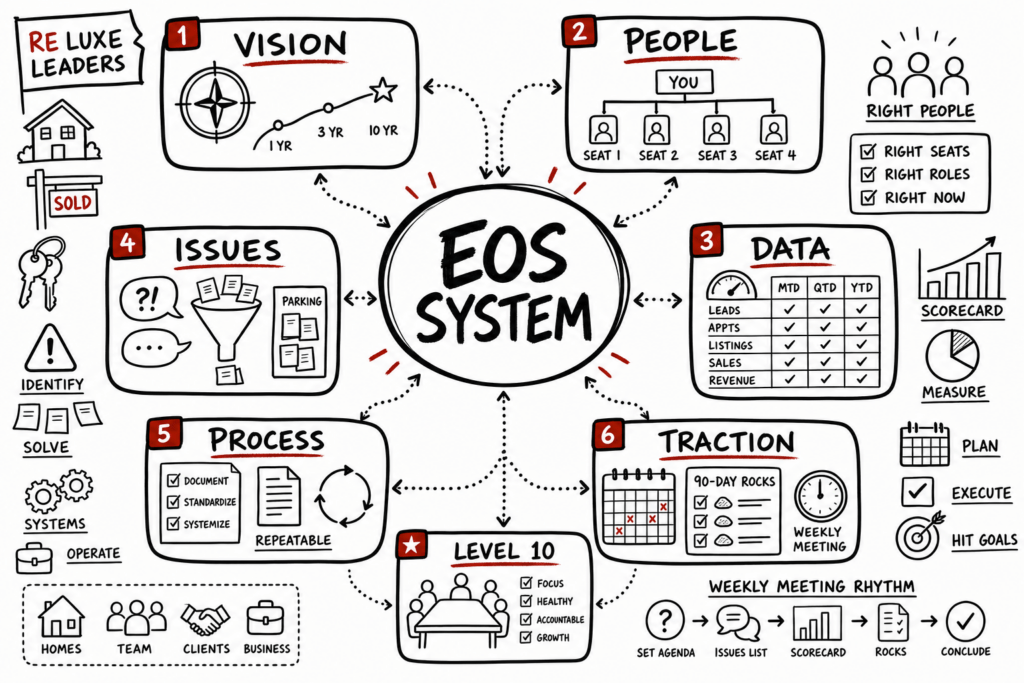
The EOS framework organizes a company around six components. Vision clarifies where the business is going. People addresses fit between responsibilities and the people holding them. Data replaces selective anecdotes with a small set of useful signals. Issues gives recurring problems a place to be named and solved. Process makes important work repeatable. Traction turns priorities into owned action.
The model is not a substitute for market strategy or professional advice. It can make a weak plan easier to execute, and it cannot decide whether a team’s offer, economics or service standards are sound.
Who Should Read It
Traction is a good fit for founders, managing brokers, rainmakers and operations leaders whose businesses have outgrown informal memory. It can help a team name the work behind lead generation, listing operations, buyer service, transactions, recruiting, finance and client care.
It is less urgent for a solo agent with no recurring team process, and it may feel basic to an organization that already has clear seats, reliable measures and a working operating cadence. Even then, the vocabulary can help a leadership team compare how it works.
Best Takeaways
1. Accountability needs a seat, not a speech
An accountability chart names the functions the business needs and the person who owns each seat. One person may hold more than one seat in a small firm, but the work and decision rights should still be visible. Review the chart as the business changes rather than treating it as a permanent org chart.
2. Quarterly priorities beat annual wish lists
A 90-day priority forces a team to choose what matters now. Write the outcome, owner, evidence of completion and dependencies. A phrase such as “improve conversion” is not a priority until the team defines the process or result it will inspect.
3. Meetings are not the enemy; bad meetings are
A weekly leadership meeting can review a small scorecard, check commitments, identify issues and reserve time for decisions. The value is not a branded meeting name. It is a reliable forum where owners bring facts and leave with a next action.
4. Data should reduce drama
Choose measures that show future work as well as closed business: qualified conversations, listing appointments, response time, signed agreements, pending risk or completed handoffs. Define each number and its period. A scorecard that no one trusts creates another argument rather than better judgment.
Where It Falls Short
The tools are simple; implementation is a people decision. Leaders still need to address performance, compensation, role fit, decision rights and difficult conversations. EOS does not supply a legal, employment or brokerage answer.
Context matters too. A luxury team, property manager and service firm may share a cadence while using different measures and controls. Copying a template without understanding the decision it supports produces performative structure. The system also cannot replace a clear market position or sound financial model.
How to Apply It
Start with the bottleneck that is creating real cost or client friction. Make one process visible, assign ownership and review the result before introducing a wider rollout.
Step 1: Identify the current bottleneck
Ask whether the problem is unclear priorities, weak handoffs, missing management, poor data, undocumented process or a strategic choice. Name the evidence and the decision the team needs to make.
Step 2: Build a simple accountability chart
List the seats required for the next stage of the business, including leadership, listings, buyers, transactions, client care, recruiting, database and finance as appropriate. Assign one accountable owner per seat where possible and record the boundaries between them.
Step 3: Choose five to fifteen weekly numbers
Pick a small set of leading indicators the team can define consistently. A high-end team might review qualified conversations, private showings, listing appointments, signed agreements, follow-up completion and pending-deal risk. Change the set when it stops informing a decision.
Step 4: Set three to seven quarterly Rocks
Choose projects that would materially improve the next 90 days: document a listing launch, rebuild a referral handoff, implement a client review rhythm or reduce a known contract-to-close error. Each Rock needs an owner, definition of done and review date.
Step 5: Run one disciplined weekly leadership meeting
Keep the agenda stable enough to build trust: review the numbers, check priorities, surface issues and solve the few that matter. The EOS tools library can provide templates, but the team’s ownership and candor determine whether the meeting helps.
Is Traction Worth Reading?
Traction is worth reading for a growing real-estate team that has momentum but inconsistent execution. Its value is practical: clearer seats, fewer competing priorities and a meeting rhythm that turns problems into owned decisions. It is less useful when the organization already has a mature operating system or when the leader wants a strategy, culture or compensation answer from one framework.
Use the book as a prompt for disciplined choices, adapt the tools to the business and keep the facts visible. You can request a complimentary one-hour conversation with a senior advisor who is an experienced operator. Talk through your next move when the operating system needs a clearer owner and a more useful cadence.