
An Elegant Puzzle Summary: Systems Thinking for Scaling Operations
What Is the An Elegant Puzzle Summary for Operations Leaders?
An Elegant Puzzle by Will Larson treats management as systems design: structures, processes, feedback loops, bottlenecks, and maintenance costs that let teams operate with less confusion as they grow. The book is written for engineering leaders, but its strongest ideas translate to multi-office brokerages, property groups, advisory teams, and service businesses rolling out technology while protecting client experience.
Book Overview
The Will Larson site provides author context. This is a field manual rather than a motivational leadership book. Its value is making organizations legible instead of making a manager indispensable.
Who Should Read It
Read it if informal coordination still works only because senior people absorb hidden complexity: escalations, exceptions, backchannel approvals, undocumented onboarding, or recurring process debt. It fits operations leaders, technical directors, founders, executives, and real-estate leaders implementing CRM, transaction, marketing, or client-service systems.
Core Idea
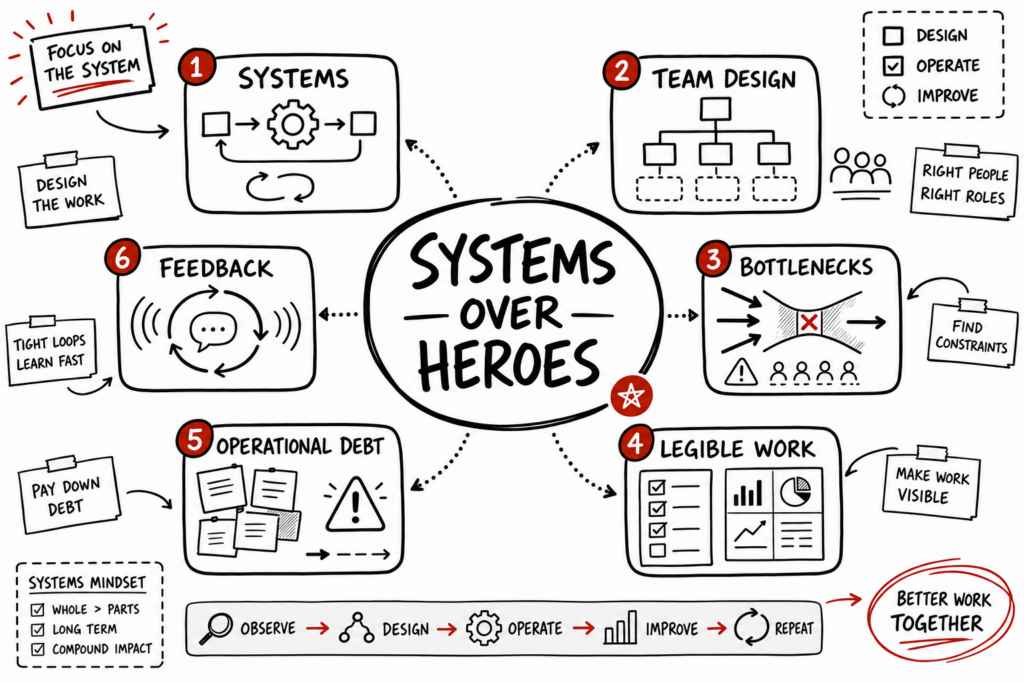
Management systems should reduce organizational drag. Replace engineering teams with sales offices, transaction coordinators, marketing pods, operations staff, vendors, and regional leadership, then ask where work gets stuck, duplicated, misunderstood, or escalated too late. The answer is usually clearer boundaries, planning cadences, ownership, onboarding, or decision rules—not more heroes.
An Elegant Puzzle Key Takeaways
1. Scaling Problems Are Usually System Problems Before People Problems
When a process fails repeatedly, leaders often blame accountability. Sometimes that is right; often the system produces predictable confusion. If several offices use a CRM differently, inspect required fields, training, competing workflows, and shared definitions before blaming individual discipline.
2. Team Design Is Strategy, Not Admin
Who owns what, how teams interface, and where boundaries sit affect delivery speed and quality. Make lead receipt, qualification, materials, client updates, approvals, and failed handoffs explicit so the leader is not the default router.
3. Processes Should Be Legible Enough to Survive Growth
A process is mature when a trained person can follow it, measure it, improve it, and know when to escalate. Clarity protects service quality when volume, geography, or personnel changes without requiring a twenty-page playbook.
4. Technical Debt Has an Operational Cousin
Messy naming, duplicated spreadsheets, inconsistent records, nonstandard vendor handoffs, and undocumented exceptions accumulate interest. Review the top recurring workflow defects, assign owners, and measure whether cleanup changes cycle time or service quality.
Best Takeaways
Every repeated escalation is data. If the same decision rises to senior leadership, ownership may be unclear, authority insufficient, incentives conflicting, or a decision rule missing. Add structure only when the cost of informality exceeds the cost of coordination; too much process can slow judgment.
The book’s publisher listing provides a specific reference for the work; no company or operational result is claimed.
Where It Falls Short
The book assumes technical organizations and can feel dense to nontechnical readers. Its structural emphasis also leaves emotional nuance, trust-building, client empathy, and political awareness to the leader. Do not copy engineering rituals; borrow the discipline of observing systems, identifying bottlenecks, and designing better defaults.
How to Apply It
Start With One Recurring Bottleneck
Choose delayed listing launches, inconsistent CRM use, slow vendor approvals, messy onboarding, unclear lead routing, or reporting gaps. Define the current state in plain language and measure it before redesigning.
Map the System, Not the Personalities
List steps, owners, inputs, handoffs, decisions, tools, and failure modes. Define what complete means, who approves exceptions, the expected turnaround, and the source of truth.
Create a Small Operating Rule
Start with one useful rule. For example, a new listing might need an owner, launch date, asset checklist, pricing status, and next milestone entered in the operating dashboard within an agreed window. Make the rule measurable, teachable, and easy to audit.
Review the Feedback Loop
After a defined period, review cycle time, escalations, understanding, and unintended friction. Systems thinking is continuous adjustment.
Protect Senior Attention
Reserve leadership attention for exceptions, strategy, talent, clients, and market positioning. If the same operational question appears every week, build the answer into the system.
Final Verdict
An Elegant Puzzle is worth reading if you are responsible for scale and tired of solving the same problem in different costumes. Structure the team, clarify the work, expose bottlenecks, reduce hidden coordination costs, and design systems that let capable people perform without constant rescue. Use the ideas as a mirror for the operating model behind growth.