
The Algebra of Wealth Summary: Review for High Earners
What Is The Algebra of Wealth Summary for High-Earning Professionals?
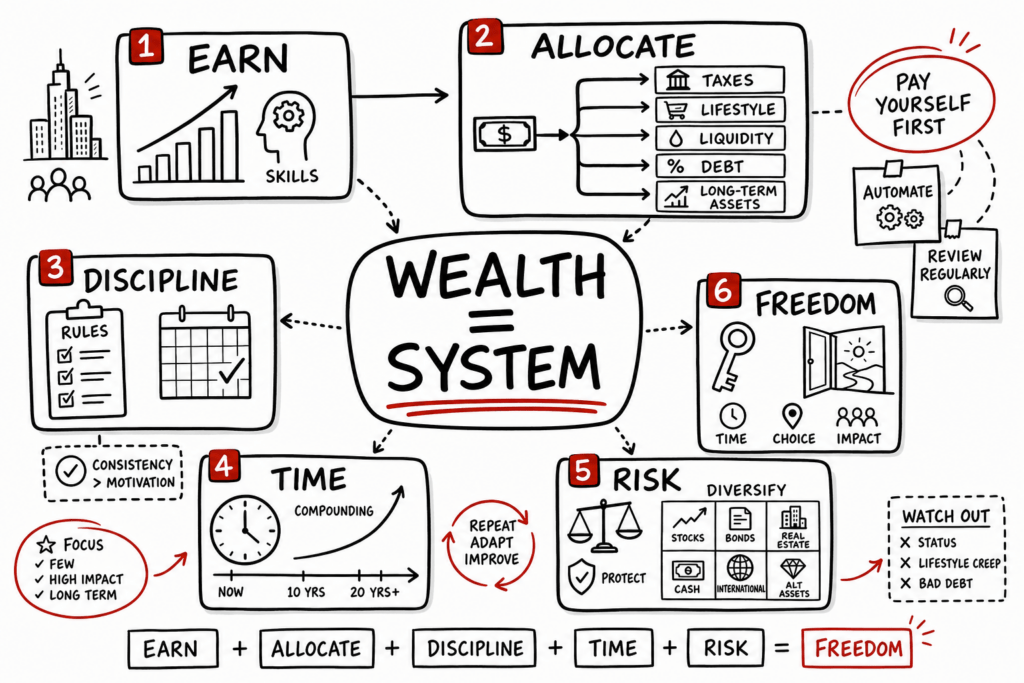
Scott Galloway’s The Algebra of Wealth presents wealth as a system that connects earning power, allocation, discipline, time, risk and freedom. For a high-earning real estate professional, the useful question is how income becomes durable choices rather than a lifestyle that depends on the next deal.
Who Should Read It
The book fits professionals with strong income who want to examine the systems around saving, spending, investing and risk. It is not a personal financial plan. A reader with complex taxes, entities, debt, insurance or family obligations needs current advice for those facts.
Core Idea
The core idea is that wealth is built through connected choices. Earning more helps, but allocation, discipline, time and risk determine what the income can support. Freedom is the ability to choose work and commitments with more room, not a number that applies to every household.
Best Takeaways
1. Earning Power Is a Strategy, Not an Accident
Skills, reputation, relationships and deliberate practice shape earning capacity. A professional can ask which activities increase durable capability and which only create short bursts of income. The answer depends on the person, market and stage of the business.
2. Discipline Beats Financial Theater
A plan is useful when it changes behavior. Automating a transfer, reviewing expenses, defining a reserve and keeping records can matter more than a sophisticated story about wealth. Discipline should fit the household’s obligations and liquidity needs.
3. Time Horizon Is an Asset
Time allows skill, relationships and investments to compound, but it does not remove risk. A long horizon still needs a plan for liquidity, emergencies and decisions that could force a sale at the wrong moment.
4. Wealth Is Also a Character Test
Money tests priorities, status pressure and the ability to delay a visible upgrade. A useful plan asks what the wealth is meant to protect or make possible, then connects spending and risk to that purpose.
Where It Falls Short
A broad formula can make personal finance sound more universal than it is. Tax law, compensation, family needs, health, debt and jurisdiction change the right decision. The book offers a lens; it does not calculate a household’s allocation or guarantee freedom.
How to Apply It
Build Your Personal Capital Allocation Rule
Write the purposes your money serves, the liquidity you need and the risks you can responsibly carry. Decide which choices require a financial, tax or legal professional. Keep the rule simple enough to review when income changes.
Separate Business Success From Household Security
A profitable business and a secure household are related but different. Track business cash flow, owner compensation, reserves, debt and personal obligations with definitions that make the boundaries clear.
Use a Freedom KPI
Choose a measure that reflects the freedom you actually value: months of liquidity, time available for family or the portion of work chosen for interest rather than necessity. The measure is personal and should not be presented as a universal threshold.
Run a Decision Filter Before Lifestyle Upgrades
Before increasing a fixed cost, ask whether the expense supports the purpose, how it behaves in a weak income year and which future choices it reduces. Keep the answer in the context of the household’s records.
Respect Compounding Without Making It Mystical
Compounding is a result of time, contribution, return and the risks attached to the asset. The Investor.gov compound-interest calculator can illustrate scenarios; it does not predict a return or account for taxes, fees or loss.
Final Verdict
The Algebra of Wealth is a useful prompt for high earners who want to connect income, allocation, discipline, time and risk to a definition of freedom. Use the publisher’s book information as context, then make specific decisions from current records and qualified advice.
You can request a complimentary one-hour conversation with a senior advisor who is an experienced operator. Talk through your next move