
Elite Market Management
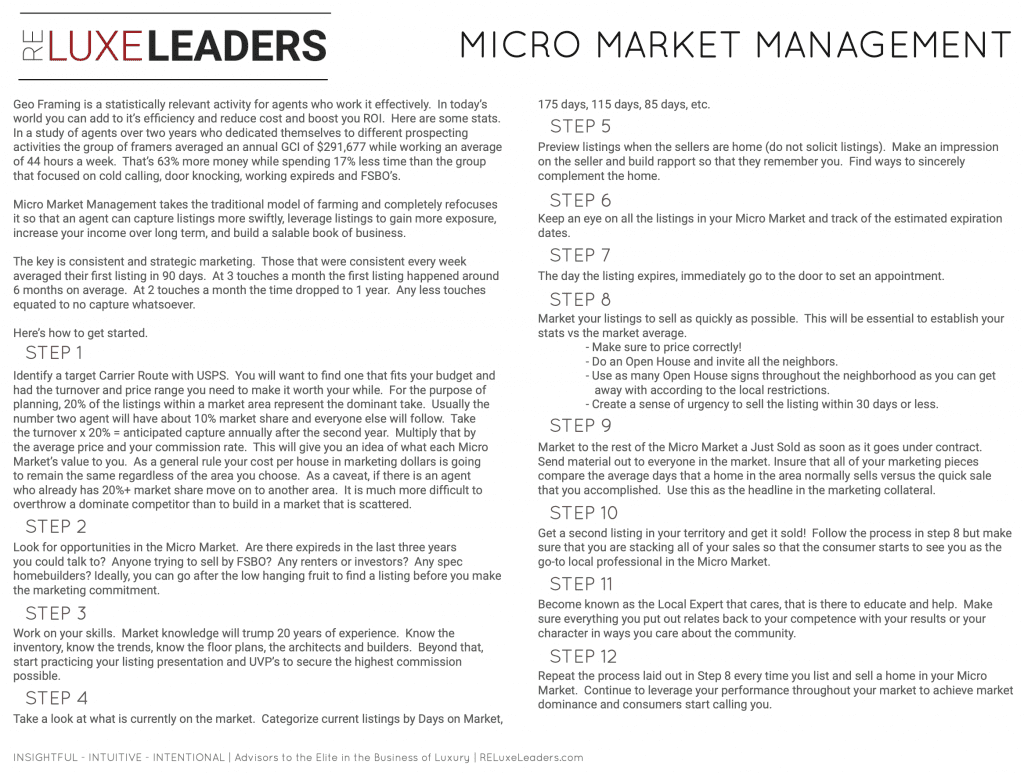
Elite Market Management reframes a traditional farming effort as a focused micro-market plan. The useful discipline is consistent, permission-based contact supported by local knowledge, clear measurement and service that respects the rules of the market.
Here are some stats
Build the baseline from your own market. Record the number of homes, turnover, price bands, days on market, listing sources, contacts and appointments for a defined period. Compare each channel using the same definitions and dates. The historical source includes coaching-study figures and timing examples, but those figures are not a current benchmark for every market; use verified local data before making a forecast.
Here’s how to get started
Step 1
Choose a lawful target area using public carrier-route or neighborhood information. Check its turnover, price range, inventory and marketing cost. For a planning scenario, multiply annual turnover by an explicitly stated target share, average price and verified commission assumption; label the result as a scenario, not an expected outcome.
Step 2
Map opportunities before committing budget. Review public listings, expired listings where contact is lawful, owner-sale activity, renters, investors and builders. Use permission-based channels and local rules for every conversation.
Step 3
Work on market knowledge. Track inventory, trends, floor plans, architects and builders, then rehearse a listing presentation that explains your service clearly without promising a result or a particular commission.
Step 4
Categorize current listings by days on market and other measures that matter locally. Keep the definitions stable so the comparison remains useful over time.
Step 5
Preview listings only when the seller, listing representative or event rules allow it, and do not use the visit to solicit a listing. Observe the home respectfully and learn what the market is responding to.
Step 6
Track active listings and estimated expiration dates from lawful public information. Keep the record current and separate a confirmed date from an estimate.
Step 7
When a listing expires, use a compliant, permission-based follow-up channel and offer useful information. Do not arrive at a door uninvited or treat an expiration as consent to contact.
Step 8
Market a listing with evidence-based pricing, a clear launch plan and an open-house plan that follows local restrictions. Use compliant signage and set urgency through agreed milestones rather than a guaranteed sale date.
Step 9
After a property goes under contract, share a just-sold message only when disclosures and permissions allow. Compare the result with local days-on-market data using the same period and definitions.
Step 10
Build the next listing through the same service standard. Review what the first assignment taught you, update the plan and keep each client’s goals and permissions distinct.
Step 11
Earn a local-expert position by teaching clearly and contributing to the community. Let verified knowledge and consistent service carry the message.
Step 12
Repeat the process after each listing, then review the measures that show whether the plan is working. Adjust the area, message or cadence when the evidence changes; a micro-market plan should remain a disciplined test, not a promise of dominance.
Click Here to Download Elite Market Management
Request a complimentary one-hour conversation with a senior advisor who is an experienced operator. Talk through your next move.