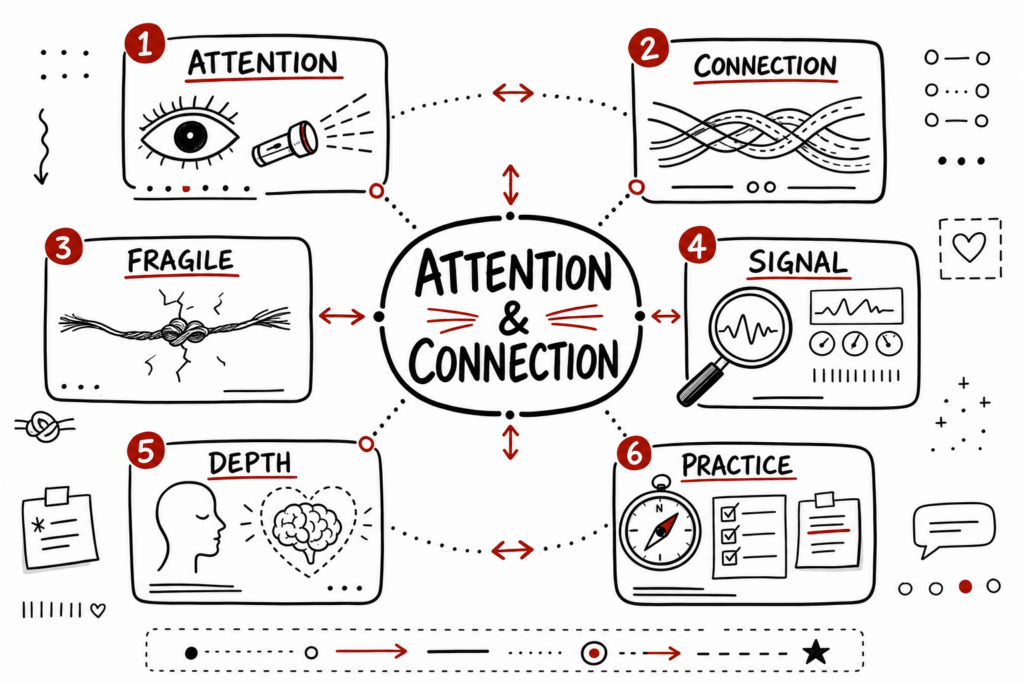
Short answer: This Light and Thread Han Kang summary is for readers who want the value of the book without flattening it into a business manual. The book is best approached as literary reflection: quiet, precise, and concerned with perception, connection, fragility, and what human beings notice under pressure. It is useful for leaders not because it teaches tactics, but because it sharpens attention.
This is a spoiler-free Light and Thread book review. It avoids major plot turns and focuses instead on themes, reader fit, and how strategy-minded professionals can use the book as cultural and reflective material. If you are looking for a conventional leadership book, this is not it. If you want a compact work that slows the mind and expands emotional range, it may earn its place on your reading list.
Light and Thread Han Kang Summary
Light and Thread sits naturally within the larger interest in Han Kang’s translated fiction: spare language, moral tension, interior weather, and attention to the body as much as the mind. For readers who know Han through works such as The Vegetarian or Human Acts, the expectation should not be comfort. Her fiction often resists easy resolution. It asks the reader to stay with ambiguity rather than rush toward certainty.
The title itself signals the book’s operating field. Light suggests perception, exposure, illumination, and sometimes distortion. Thread suggests connection, inheritance, memory, repair, and the possibility that what binds us is also delicate. Together, the two images create a useful map: how people see, how they are connected, and how those connections hold or fray under quiet pressure.
The book has drawn attention in professional reading circles partly because affluent readers and executives increasingly look beyond management manuals for depth. Curated lists, including wealth-sector and finance-adjacent reading roundups such as CNBC’s coverage of major summer reading lists, often mix business, biography, history, and serious fiction for exactly this reason. Literature gives leaders something strategy decks rarely provide: emotional complexity without immediate instruction.
Core Idea
The core idea of Light and Thread is that meaning is not always found in declaration. It often appears in what is half-seen, nearly missed, or held together by the thinnest possible connection. Han Kang’s strength is restraint. She does not over-explain the emotional architecture. She lets the reader feel how perception changes when a person is wounded, alert, uncertain, or longing for coherence.
This matters because many ambitious professionals are trained to overvalue clarity. Clarity is useful, but it can also become a defensive posture. The world of the book suggests that human reality is rarely clean. People do not always explain themselves directly. Relationships do not always break loudly. Memory does not always arrive in sequence. Light moves. Threads tangle.
That is the best entry point for understanding Han Kang Light and Thread themes: perception, fragility, relational tension, and the ethics of attention. The book does not offer a motivational arc. It offers a controlled emotional atmosphere where the reader is asked to notice more carefully.
Best Takeaways
1. Attention is a form of intelligence
One of the strongest Light and Thread key takeaways is that attention is not passive. The book rewards readers who notice small shifts in image, tone, and silence. For leaders, this is more than literary appreciation. High-level decision-making often depends on reading weak signals: a hesitation in a negotiation, a pattern in client behavior, a change in team energy, a risk that has not yet become visible.
Han’s style trains patience. It reminds the reader that not every meaningful signal arrives as data. Some arrive as atmosphere.
2. Connection is powerful because it is fragile
The thread image is useful because it avoids sentimentality. A thread can bind, mend, guide, or constrict. It can also snap. This is where the book’s emotional intelligence becomes most relevant. Relationships in serious fiction often show what leadership language tends to hide: dependence, misunderstanding, obligation, and the limits of control.
For executives, founders, investors, and advisors, this is a valuable corrective. Networks are not just assets. Families are not just support systems. Teams are not just organizational charts. Every connection has tension in it.
3. Resilience is quieter than the market makes it sound
The book’s view of resilience is not the glossy kind. It is not about domination, productivity, or personal brand recovery. It is closer to endurance: remaining perceptive after pain, staying connected without certainty, and continuing to see the world even when the world feels altered.
That makes the book useful for leaders who are tired of performance-based self-improvement. It creates space for a more humane definition of strength.
Who Should Read It
Light and Thread reader fit is specific. This is a strong choice for readers who appreciate literary fiction, translated work, emotional compression, and books that ask for concentration. It will appeal to global executives who want cultural literacy beyond the usual English-language business canon. It will also suit private clients, advisors, and founders who use fiction as a way to stay psychologically flexible.
If you are building a serious personal library, Han Kang belongs in the conversation. Her work has become central to contemporary translated fiction, and readers looking for a broader Han Kang translated fiction summary should also review her author background and publication history through credible publisher resources such as this Han Kang author profile.
Who should skip it? Readers who want plot-driven entertainment, tidy answers, or direct professional advice. This is not a beach read in the frictionless sense. It is short enough to move through quickly, but not designed to be consumed casually.
Where It Falls Short
The same qualities that make the book powerful may make it frustrating. Han Kang’s restraint can feel severe. Readers who need explicit motivation or a clearly stated thesis may find the atmosphere too muted. The symbolism of light and thread is elegant, but some may feel it risks becoming over-discussed in reviews because the title gives critics an obvious interpretive frame.
There is also a risk in positioning the book too aggressively for leaders. Not every serious novel needs to be translated into strategy language. The best way to read Light and Thread is first as art, not as a tool. The professional value comes later, indirectly, through reflection.
So, Is Light and Thread worth reading? Yes, if you are willing to meet it on its own terms. No, if your current reading goal is speed, entertainment, or immediate implementation.
Light and Thread Leadership Lessons
The phrase Light and Thread leadership lessons needs careful handling. The book is not teaching leadership in any corporate sense. Still, it offers three useful disciplines for serious professionals.
First, it trains non-reactive attention. Leaders often move too quickly from observation to action. The book encourages staying with complexity before deciding what it means.
Second, it deepens relational awareness. High-performing people can become fluent in outcomes and underdeveloped in emotional consequence. Han’s fiction works against that imbalance.
Third, it challenges the fantasy of total visibility. In organizations, families, markets, and societies, much remains partially hidden. The leader’s task is not to pretend everything is knowable. It is to act responsibly despite incomplete light.
Light and Thread Strategy Lessons
The most useful Light and Thread strategy lessons are indirect. Strategy is often described as positioning, allocation, and advantage. But before any of that, strategy depends on perception. What do you see that others miss? What pattern is forming before it becomes obvious? Which thread matters, and which one only looks important because it is nearest?
The book can help recalibrate a mind overloaded by dashboards, forecasts, and public noise. Its pace is a strategic antidote. It asks you to slow down enough to distinguish signal from glare.
For affluent readers, this is especially relevant. Wealth creates access, but it can also create insulation. Serious fiction punctures insulation. It restores contact with ambiguity, vulnerability, and moral consequence. That is not soft value. It is part of mature judgment.
How to Apply It
Read Light and Thread in one or two quiet sittings if possible. Do not over-annotate on the first pass. Let the imagery work before turning it into notes. After reading, use three prompts:
What did the book make me notice? This is the perception question. Apply it to a current business situation, family dynamic, or investment decision where the obvious interpretation may be too simple.
Where is the thread under tension? Identify one relationship, partnership, or system that appears stable but may be carrying hidden strain.
What light am I trusting too much? In other words, what source of information feels clarifying but may actually be distorting the picture?
These prompts turn the reading into reflective practice without reducing the novel to a checklist.
Final Verdict
Light and Thread is not a book for readers who want the machinery exposed and labeled. Its value is quieter. It offers atmosphere, compression, and emotional precision. For leaders, its usefulness lies in attention: seeing more subtly, holding complexity longer, and respecting the fragile threads that shape human decisions.
Read it if you want literary depth with professional aftershocks. Skip it if you need a direct playbook. For the right reader, it is less a lesson than a recalibration.
For more private-briefing style reviews and strategy-minded reading notes, explore the latest RE Luxe Leaders book briefings. If you are applying these ideas to positioning, client trust, or brand strategy, you can also book a confidential strategy call with RE Luxe Leaders.