
Magic Words Summary: Jonah Berger for Luxury Real Estate
What Is the Best Magic Words Summary for Real Estate Leaders?
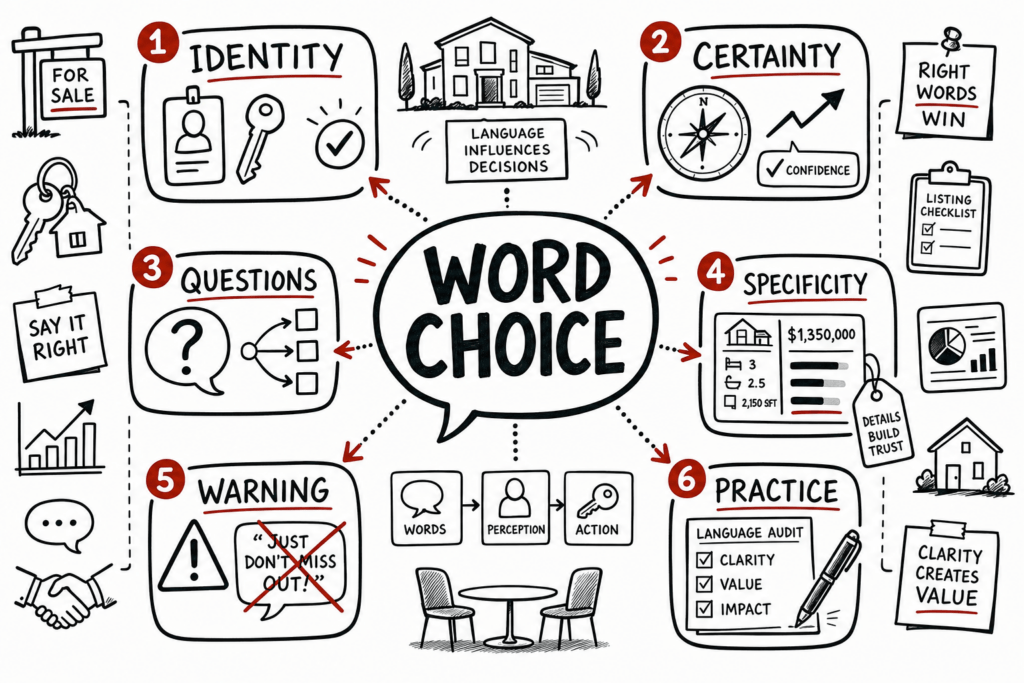
Jonah Berger’s Magic Words is useful for real estate leaders who want to make high-stakes conversations clearer without turning them into scripts. Its central lesson is that wording can shape identity, attention, agency and perceived certainty. Language can support a sound recommendation; it cannot repair weak evidence, poor service or an unsuitable strategy.
The practical question is whether a phrase helps a client understand the choice and retain agency. That standard is more durable than a promise that one expression will convert a listing, win a negotiation or change a result.
Magic Words Summary: The Private Briefing
The publisher’s page for Magic Words frames the book around what to say, when to say it and why wording matters. For luxury real estate, that lens applies to pricing conversations, offer strategy, objection handling, referral requests and team leadership.
Premium clients generally need confidence, relevance and discretion rather than pressure. The book is strongest when used to examine language habits around a real advisory process. It is not a complete negotiation system, and it does not remove the need for market evidence or professional judgment.
Who Should Read It
The clearest fit is a professional who already has substance and wants to communicate it with more precision. Agents can apply the ideas to listing presentations, buyer consultations and negotiation framing. Team leaders can use them in recruiting, coaching, feedback and standards.
Readers looking for theatrical closing lines or aggressive persuasion shortcuts should skip it. Better wording cannot compensate for an unclear service model, weak pricing analysis or a broken client experience.
Core Idea
Language shapes how a message is received because it shapes identity, agency, attention, emotion and certainty. A leader can tell a client what to do, or help the client articulate which outcome matters and what evidence supports the next step.
Berger’s Wharton profile provides academic context for his work on word of mouth and influence. That context supports reading the book as a language lens, not as a collection of guaranteed phrases.
Best Takeaways
1. Use Language That Gives People an Identity, Not Just an Instruction
Identity language can help a person connect a decision to a value they already hold. In a real estate conversation, “disciplined buyer” or “long-term owner” should describe a genuine goal, not manufacture status. The client still needs the facts and the freedom to disagree.
2. Certainty Language Matters, but Overconfidence Backfires
Clients want a recommendation they can understand, not false certainty. State what the current evidence supports, what remains uncertain and what would change the plan. Confidence is structured clarity: it does not require pretending that a market, inspection or negotiation has no risk.
3. Questions Can Redirect Without Creating Resistance
A precise question can help a seller rank priorities before the team recommends a path. Is the priority privacy, speed, exposure, net proceeds or another outcome? The question creates participation; it does not remove the advisor’s responsibility to bring evidence and a clear recommendation.
4. Concrete Language Beats Vague Prestige Language
Words such as rare, iconic and world-class carry little information by themselves. Describe the property, the constraint, the comparable evidence or the service step that makes the recommendation meaningful. Specific language earns trust by making the reasoning easier to inspect.
Where It Falls Short
A phrase that works in a study may need adjustment for a family office, public figure, developer, buyer or seller under pressure. The book does not teach offer sequencing, stakeholder management, confidentiality, market analysis or a complete listing strategy.
There is also a risk of treating the book as a phrase bank. Persuasive language becomes manipulative when it hides uncertainty or tries to bypass a client’s judgment. The useful discipline is to bind every confident sentence to a real reason and a visible next step.
Magic Words Leadership Lessons
Leaders can use identity language, clean questions and precise feedback to make behavior easier to choose. “Protect momentum” becomes useful when it is connected to an agreed response owner, a realistic response window and a way to handle exceptions.
Language is one way standards travel through a team. The standard still needs training, measurement and accountability.
Magic Words Strategy Lessons for High-Value Deals
In a listing conversation, begin with the client’s goals, bring concrete market evidence and present the recommendation with calm clarity. In buyer advisory, separate enthusiasm from criteria such as resale exposure, inspection risk, insurance constraints and renovation timeline.
The sequence is more useful than a single “magic” phrase: respect the client’s agency, make the evidence legible and name the decision that follows.
How to Apply It
Review five recent emails, two presentation sections, two negotiation messages and one coaching conversation. Mark wording that is vague, inflated, defensive or overly directive. Rewrite it with four filters: name the client’s actual priority, replace prestige language with evidence, ask a question where priorities are unclear and state the recommendation with a measurable next step.
For a team, choose one conversation type for a weekly language review. Compare drafts for clarity and pressure, then test the preferred version against real feedback. Keep records of what changed and why.
Final Verdict
Magic Words is a useful read for professionals whose work depends on trust-sensitive conversations. It can sharpen questions, framing and confidence while leaving the client’s agency intact. It is not a substitute for market knowledge, evidence or a full negotiation system.
Read it as a strategist, then connect each language choice to the real facts and decision in front of the client.
You can request a complimentary one-hour conversation with a senior advisor who is an experienced operator. Talk through your next move