What Is The Making of a Manager Summary for New Leaders?
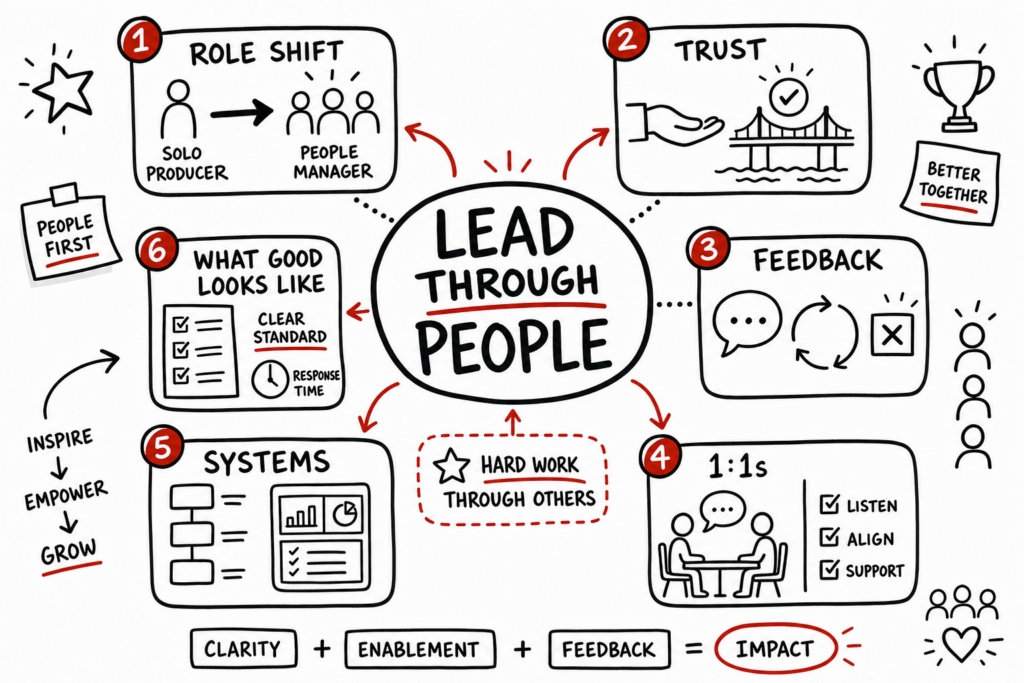
The Making of a Manager summary is most useful for first-time managers, team leads, and brokerage operators who need to shift from personal production to team performance. In The Making of a Manager, Julie Zhuo argues that management is not a title or personality type; it is the work of getting better outcomes through other people. A practical definition from the book’s logic: your job is no longer to be the best doer, but to create clarity, trust, feedback, and operating rhythm so the team can do stronger work without constant rescue. For a real estate team, that might mean moving from closing 20 deals personally to building a repeatable cadence where agents hit response-time standards, pipeline reviews happen weekly, and 1:1s surface problems before they become client issues. Reader-fit implication: this is a smart management book for beginners, especially if you want direct language over corporate theory.
Who Should Read It
This The Making of a Manager review is written for ambitious professionals who have been promoted because they were good at the work, then discovered that managing people is a different sport. That includes new brokerage team leads, operations managers, sales leaders, rainmakers building their first pod, and high-performing individual contributors now responsible for hiring, coaching, feedback, and culture.
Julie Zhuo wrote the book from the perspective of someone who learned management on the job, not from a distance. That matters. The book does not feel like a leadership lecture delivered from a retreat center. It feels like someone describing the first-time manager transition with enough honesty to be useful: the awkward 1:1s, the uncertainty around feedback, the pressure to look confident, and the slow realization that your calendar is now a leadership system.
If you are already a seasoned executive with mature people systems, this may feel familiar. If you are managing a small real estate team, a growing brokerage office, or an admin-to-agent support structure for the first time, the book is a clean starting point. It is also a strong book review for managers who need to decide whether to recommend one practical read to emerging leaders.
Core Idea
The core idea is simple and uncomfortable: management is not doing more work through your own effort. It is improving the conditions under which other people do their best work. Zhuo returns to this again and again through trust, clarity, feedback, hiring, meetings, delegation, and team health.
That is why this is a useful new manager book summary for real estate leaders. In brokerage settings, many team leaders rise because they were strong producers. They know scripts, contracts, client management, listing prep, lead conversion, negotiation, and local market nuance. Then they hire agents or staff and expect those standards to transfer by osmosis. They usually do not.
The book’s strongest leadership lesson is that standards have to be translated into systems. If you want agents to follow up faster, define the response expectation. If you want stronger client communication, model what good looks like. If you want fewer fires, run better 1:1s. If you want accountability, make goals visible and inspect progress without turning every conversation into a courtroom.
Zhuo’s official site offers more context on her work and writing at JulieZhuo.com. For broader leadership context, the Harvard Business Review leadership archive is a useful companion source.
Best Takeaways
1. Your output is now the team’s output
One of the clearest The Making of a Manager key takeaways is that management changes the scoreboard. Your value is no longer measured only by what you personally complete. It is measured by the quality, speed, consistency, and judgment of the people you lead.
For a brokerage owner, that means the team’s follow-up discipline, client experience, conversion rate, and retention are part of your leadership performance. If the team keeps missing details, the answer is not always more pressure. It may be unclear expectations, weak onboarding, poor delegation, or a lack of feedback loops.
2. Trust is operational, not sentimental
Zhuo treats trust as a working asset. People need to believe you care about them, but they also need to believe you can help them make better decisions. This is where the book becomes practical. Trust is built through consistency, context, listening, and useful feedback.
In real estate, this matters because emotional volatility is baked into the business. Deals fall apart. Clients panic. Agents avoid hard calls. Staff burn out from invisible complexity. A manager who has trust can coach through that. A manager without trust is reduced to chasing, correcting, and reacting.
3. Feedback should be normal, not dramatic
One of the best Julie Zhuo leadership lessons is that feedback works better when it is frequent, specific, and tied to the work. New managers often delay feedback because they do not want to upset people. Then the problem gets bigger, the conversation gets heavier, and everyone feels blindsided.
The better approach is to make feedback part of the rhythm. After a listing presentation, review what landed and what needs tightening. After a buyer consult, discuss where expectations were clear or vague. After a missed handoff, identify the process gap. The goal is not to prove authority. The goal is to improve performance while preserving dignity.
4. Meetings are not the enemy. Bad meetings are.
The book gives practical attention to 1:1s and team meetings. That is useful because many operators treat meetings as either unavoidable clutter or a cure-all. Zhuo’s point is more disciplined: meetings should create alignment, surface issues, and support decisions.
A strong 1:1 is not a status interrogation. It is a place to understand priorities, blockers, development needs, and morale. A strong team meeting is not a random update parade. It should clarify what matters now, what changed, who owns what, and what decisions need to be made.
Where It Falls Short
The book’s strength is also its limitation. It is accessible, concise, and grounded in experience, but it does not go deep into every difficult management scenario. If you are looking for advanced compensation design, complex conflict mediation, legal HR guidance, or scaling a 200-person organization, this is not the final manual.
It can also feel slightly overhyped when people frame it as the only managerial skills book a new leader needs. It is not. It is a strong starting point, especially for language, mindset, and basic operating habits. But leadership maturity comes from repetition, hard conversations, pattern recognition, and adapting principles to your business model.
For real estate leaders, another caveat is industry translation. Zhuo’s background is in tech, so some examples will not map perfectly to brokerage life. Real estate has unusual dynamics: independent contractors, commission pressure, personal brands, client urgency, uneven lead flow, and emotional decision cycles. You will need to adapt the ideas rather than copy them wholesale.
How to Apply It
Start with the role shift
If you are making the first-time manager transition, write down the work you must stop owning personally. Then write down what your team must learn to own instead. This is the beginning of real delegation. Not dumping tasks. Not hovering. Actual transfer of responsibility with standards, training, and follow-up.
Install a 1:1 rhythm
Run weekly or biweekly 1:1s with every direct report. Keep them simple: priorities, blockers, client issues, skill development, and one piece of feedback. If you manage agents, ask what conversations they are avoiding, what deals feel fragile, and where they need support. If you manage staff, ask what process is breaking and what decisions are stuck.
Define what good looks like
Most teams underperform where standards are assumed but never documented. Create simple examples: a strong buyer consultation, a clean handoff from agent to transaction coordinator, a listing prep timeline, a lead follow-up standard, a weekly pipeline review format. This is how to manage people effectively without relying on personality or constant correction.
Make feedback faster and smaller
Do not save feedback for quarterly reviews or crisis moments. Give it close to the work. Keep it specific. Tie it to a business outcome. For example: the issue is not that an agent is careless. The issue is that a delayed update caused the client to lose confidence. That distinction keeps the conversation useful.
Measure team health with visible signals
Use simple KPIs: 1:1 completion rate, lead response time, listing prep deadlines met, client update cadence, deal fall-through reasons, agent retention, and repeat referral activity. A manager’s job is partly to notice patterns early enough to intervene. If the same problem repeats three times, treat it as a system issue before treating it as a character flaw.
Final Verdict
The Making of a Manager is one of the more practical leadership lessons for new managers because it respects the messiness of learning to lead. It does not pretend management is glamorous. It shows that the job is built in ordinary moments: listening better, setting clearer expectations, giving timely feedback, hiring thoughtfully, and helping people make better decisions.
For the RE Luxe Leaders audience, the book is especially relevant because many real estate businesses grow faster than their management systems. A top producer becomes a team lead. A team lead becomes a brokerage operator. Suddenly, the business depends less on personal hustle and more on whether people understand the standard and can repeat it without constant supervision.
Read it if you want a calm, practical, management book for beginners that helps you think like a leader without drowning you in theory. Skip it if you need advanced organizational design or industry-specific brokerage playbooks. The strongest move is to read it, extract the operating habits, and adapt them to your team’s client experience, sales process, and accountability rhythm.
For more private-briefing style strategy reads, explore the latest RE Luxe Leaders book and business breakdowns, or book a confidential strategy call when your leadership structure needs sharper support.