What is the An Elegant Puzzle summary for operations leaders?
This An Elegant Puzzle summary is for operations leaders, technical managers, and service-business executives who need calmer systems for scaling teams and processes. In An Elegant Puzzle, Will Larson argues that engineering management is not primarily personality management or heroic firefighting; it is the design of repeatable systems that make good decisions easier. A useful working definition from the book: management is the work of creating structures, processes, and feedback loops that let teams operate with less confusion as headcount, codebases, products, or offices grow. The strategic implication is clear: if your team needs the founder, broker-owner, CTO, or regional director to unblock every cross-functional issue, you do not have a talent problem first; you have a system-design problem, such as decision latency caused by five approval handoffs when two would do. Readers looking for practical technical management frameworks, especially around team structure, planning, onboarding, and coordination, will get the most value.
Book Overview
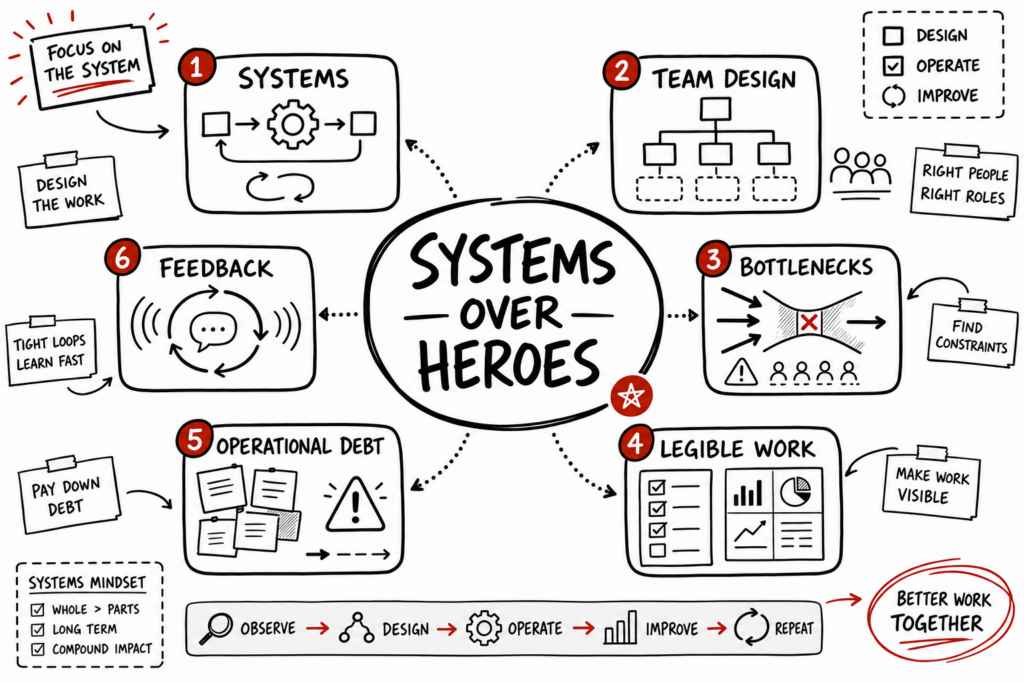
An Elegant Puzzle: Systems of Engineering Management by Will Larson is not a motivational leadership book. It is closer to a field manual for managers trying to make growing organizations less chaotic. Larson, known for leadership roles in high-growth technology environments, treats management as systems design: teams have inputs, constraints, feedback loops, bottlenecks, failure modes, and maintenance costs.
That framing is the reason this An Elegant Puzzle book review matters beyond software companies. The book is written for engineering leaders, but the strongest ideas translate directly to service-business operations: multi-office real estate firms, boutique brokerages, property groups, advisory teams, and any leadership team rolling out technology while protecting client experience.
The book’s central move is useful: it refuses to romanticize the overloaded leader. Larson is more interested in making the organization legible than making the manager look indispensable. That distinction is where the value sits.
Who Should Read It
Read this if you lead a team that has outgrown informal coordination. The sweet spot is a company where the old rhythm still technically works, but only because senior people are absorbing hidden complexity: Slack escalations, one-off exceptions, unclear ownership, backchannel approvals, undocumented onboarding, and recurring process debt.
It is especially useful for:
- Engineering managers and technical directors moving from individual problem-solving to organizational design.
- Operations leaders coordinating distributed offices, regional teams, or service lines.
- Founders and senior executives who are tired of being the default escalation layer.
- Real estate and luxury service leaders implementing new CRM, transaction, marketing, or client-service systems.
- Executives who want an engineering management book summary they can actually apply to non-engineering operations.
If you want a warm narrative about culture, this may feel too structural. If you want a practical way to think about scaling teams and processes, it earns its place.
Core Idea
The core idea is simple and demanding: management systems should reduce organizational drag. Larson looks at the recurring puzzles of engineering leadership through a systems lens: how teams are structured, how planning happens, how technical debt is handled, how managers allocate attention, and how decisions move through a growing company.
For RE Luxe Leaders, the translation is straightforward. Replace engineering teams with sales offices, transaction coordinators, marketing pods, operations staff, property managers, technology vendors, and regional leadership. The same question applies: where does work get stuck, misunderstood, duplicated, or escalated too late?
Larson’s answer is not to hire more heroes. It is to redesign the system. That may mean clearer team boundaries, better planning cadences, more explicit ownership, improved onboarding, or decision rules that prevent every tradeoff from becoming a meeting.
An Elegant Puzzle Key Takeaways
1. Scaling problems are usually system problems before people problems
One of the strongest An Elegant Puzzle leadership lessons is the discipline of diagnosing structure before blaming individuals. When a process fails repeatedly, leaders often assume someone needs more accountability. Sometimes that is true. More often, the system is producing predictable confusion.
Example: if three offices use the same CRM differently, the issue may not be agent discipline. It may be unclear required fields, weak training, competing local workflows, and no shared definition of pipeline health. A better KPI would be CRM adoption quality, such as percentage of active opportunities with next step, source, owner, and follow-up date completed. That metric creates visibility without relying on motivational speeches.
2. Team design is strategy, not admin
Larson treats team structure as a core operating lever. Who owns what, how teams interface, and where boundaries sit all affect delivery speed and quality. This is one of the most transferable An Elegant Puzzle strategy lessons for service businesses.
In a luxury real estate operation, a vague split between marketing, agent support, client events, listing coordination, and digital leads creates friction. The leader then becomes the router. Better design makes ownership obvious: who receives the lead, who qualifies it, who prepares materials, who updates the client, who closes the loop, and what happens when a handoff fails.
3. Processes should be legible enough to survive growth
Larson’s systems thinking for engineering leadership is really a push for legibility. A process is not mature because it exists in someone’s head. It is mature when a trained person can follow it, measure it, improve it, and know when to escalate.
This matters in multi-location operations. If a client onboarding sequence works only when one senior coordinator is involved, you do not have a process. You have dependency. The goal is not bureaucracy. The goal is a workflow clear enough to protect service quality when volume, geography, or personnel changes.
4. Technical debt has an operational cousin
In software, technical debt is the future cost of shortcuts taken today. Service businesses have the same pattern: messy naming conventions, duplicated spreadsheets, inconsistent client records, nonstandard vendor handoffs, undocumented exceptions, and systems no one trusts.
The practical takeaway is to stop treating cleanup as optional. Operational debt accumulates interest. It slows onboarding, distorts reporting, weakens client service, and makes technology rollouts harder. A quarterly debt review can be as valuable as a revenue meeting if it identifies the top three recurring workflow defects and assigns owners to resolve them.
Best Takeaways
The best part of An Elegant Puzzle is its refusal to separate leadership from operating design. Larson gives managers permission to think like architects. The manager’s job is not just to encourage people, evaluate performance, and attend planning meetings. It is to build an environment where good work is easier and bad handoffs are harder.
The strongest takeaway for executives is this: every repeated escalation is data. If the same decision keeps rising to senior leadership, either ownership is unclear, authority is insufficient, incentives conflict, or the process is missing a decision rule. That is not noise. That is your operating system asking for redesign.
A second strong takeaway is the importance of pacing. Scaling does not mean adding process everywhere. It means adding the right amount of structure at the moment the cost of informality exceeds the cost of coordination. For a small elite team, too much process slows judgment. For a 60-person, multi-office organization, too little process creates service variance and executive overload.
For readers who want the source, the book is available through major retailers, including An Elegant Puzzle on Amazon.
Where It Falls Short
The book’s main limitation is also its identity: it is written from inside engineering leadership. Some sections assume familiarity with technical organizations, software delivery, and engineering management vocabulary. Non-technical readers may need to translate examples into their own operating reality.
It can also feel dense. Larson compresses a lot of frameworks into relatively short sections. That makes the book useful as a reference, but less smooth as a cover-to-cover read. If you are looking for a single polished model, you may find the structure more like a cabinet of tools than a guided leadership journey.
The risk for ambitious operators is over-adoption. Not every concept should become a new meeting, dashboard, or policy. The point is not to copy engineering rituals. The point is to borrow the discipline of observing systems, identifying bottlenecks, and designing better defaults.
Finally, the book is stronger on management architecture than on emotional nuance. Larson is not dismissive of people, but the emphasis is structural. Leaders in luxury service environments still need judgment, trust-building, taste, client empathy, and political awareness. Systems do not replace those skills. They protect them from being wasted on preventable confusion.
How to Apply It
Start with one recurring bottleneck
Do not launch a company-wide transformation after reading this book. Pick one recurring operational pain point: delayed listing launches, inconsistent CRM usage, slow vendor approvals, messy client onboarding, unclear lead routing, or regional reporting gaps. Define the bottleneck in plain language and measure the current state.
For example: average time from signed listing agreement to live marketing package is nine business days, with four avoidable revision loops. That is specific enough to redesign.
Map the system, not the personalities
List the steps, owners, inputs, handoffs, decision points, tools, and failure modes. Ask where ambiguity enters the system. Look for missing definitions: What counts as complete? Who approves exceptions? What is the expected turnaround time? Which tool is the source of truth?
This is where An Elegant Puzzle is most useful for book review for operations leaders: it pushes you away from vague frustration and toward visible design.
Create a small operating rule
Resist the urge to write a 20-page playbook first. Create one useful rule. Example: every new listing must have owner, launch date, asset checklist, pricing status, and next milestone entered into the operating dashboard within 24 hours of agreement execution. That rule is measurable, teachable, and easy to audit.
Review the feedback loop
After 30 days, review what changed. Did cycle time improve? Did escalations drop? Did team members understand the process? Did the rule create unintended friction? Systems thinking is not set-and-forget. It is continuous adjustment.
Protect senior attention
The executive application is simple: stop spending senior judgment on decisions that should have defaults. Use leadership attention for exceptions, strategy, talent, clients, and market positioning. If the same operational question appears every week, build the answer into the system.
Final Verdict
An Elegant Puzzle is worth reading if you are responsible for scale and tired of solving the same problem in different costumes. It is not a glamorous book, and that is the point. Its value is in disciplined thinking: structure the team, clarify the work, expose the bottleneck, reduce hidden coordination costs, and design systems that let capable people perform without constant rescue.
For RE Luxe Leaders, the best use of the book is not as an engineering manual, but as a mirror. Where are your service standards dependent on memory? Where is technology adoption being undermined by unclear process? Where has growth made yesterday’s informal elegance today’s operational drag?
If those questions are live in your business, Larson gives you a practical language for the next layer of leadership. For more strategy briefings on scaling luxury operations, technology adoption, and executive decision systems, read the latest RE Luxe Leaders reviews—or book a confidential strategy call when you are ready to redesign the operating model behind the growth.