
$100m Offers Summary: Pricing Lessons for Luxury Real Estate
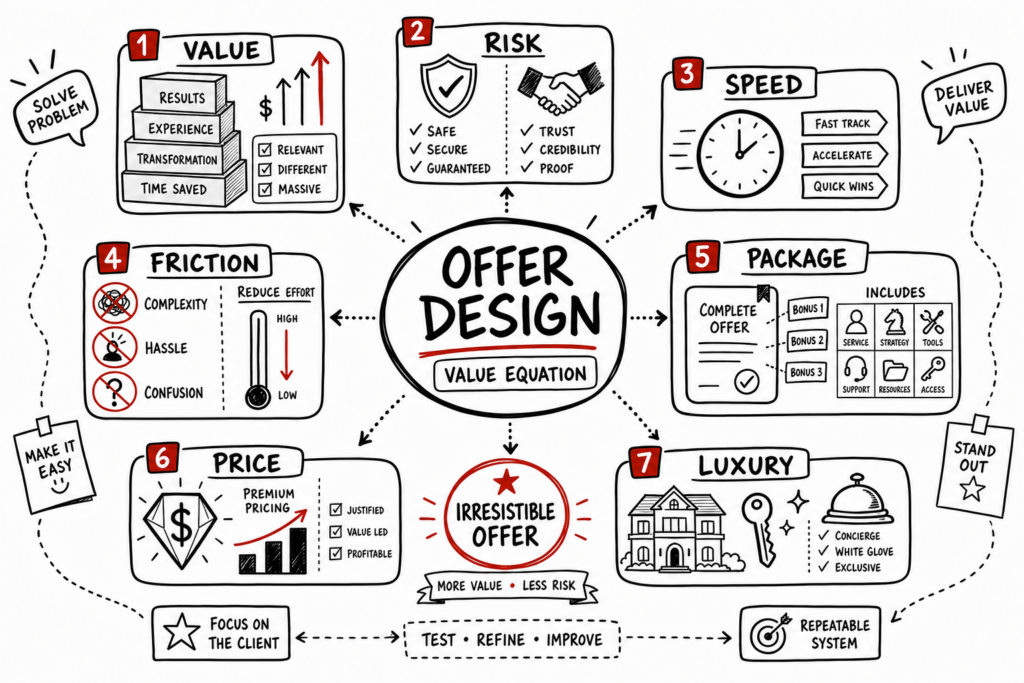
What Is the Best $100M Offers Summary for Luxury Real Estate Leaders?
$100M Offers by Alex Hormozi is a tactical book about designing a commercial offer so the value, risk and effort are easier for the right client to understand. For a luxury real-estate leader, the useful translation is a clearer service promise and a more deliberate client journey. The book does not supply fiduciary, legal, brokerage or brand guidance.
Book and Author Snapshot
Hormozi’s framework grew from service-business and entrepreneurial sales contexts. Acquisition.com’s resources provide primary context for the author’s broader business material. Use the book as a lens for offer design, then test each idea against the expectations and rules of a regulated, high-trust service.
Who Should Read It
The book is most useful for principals, rainmakers and team owners whose offer sounds interchangeable with every other “white-glove service” promise. It can help a leader name the client problem, clarify the process and remove avoidable uncertainty. It is less useful for readers looking for negotiation training, fiduciary standards or a complete luxury-brand philosophy. The National Association of REALTORS® is a separate source for industry context and professional resources.
Core Idea
The Value Equation frames value through the desired outcome, confidence that the outcome is possible, time delay and client effort. The equation is memorable; the application requires judgment. A seller may value privacy and decision clarity more than speed. A relocating executive may value coordination. A buyer may value access paired with disciplined diligence.
The leader’s task is to make the process legible: what happens first, who owns each step, what information is needed, how decisions are made and what the client can expect. Do not turn the framework into a guarantee or imply control over market outcomes.
Best Takeaways
1. Grand Slam Offers Are Built, Not Discovered
A differentiated offer is a designed service package, not a louder list of credentials. Name the client, the problem, the process, the decision points and the evidence you can responsibly provide. A private seller advisory might include valuation scenarios, confidentiality choices, market feedback and defined review dates; include only what the firm can deliver.
2. Pricing Strategy Should Reduce Doubt, Not Apologize for Fees
Compensation conversations are clearer when they connect the service to judgment, risk control and the client’s stated goal. Do not promise a higher sale price or a particular net result. Explain what the fee covers, what remains uncertain and how the client can evaluate the work.
3. Buyer Friction Is Often Self-Inflicted
A vague timeline, repeated requests for the same information or too many unowned choices can make a good service feel harder than it needs to be. Map the client journey, remove avoidable handoffs and tell the client what decision is next. Less friction should mean greater clarity, not rushed consent.
4. Bonuses Are Useful Only When They Solve Real Objections
An added service earns a place when it addresses a stated concern: relocation coordination, a privacy conversation, vendor diligence or a post-close handoff. Decorative extras can distract from the core promise. Check whether the addition is permitted, resourced and understood by the team.
Where It Falls Short
The book’s sales examples can encourage aggressive guarantees, scarcity and urgency. Luxury real estate needs restraint. Translate the principle into transparent process, documented evidence and clear decision controls. Never guarantee a market result simply because the framework rewards certainty.
The book also says less about family dynamics, long-cycle relationships, fiduciary judgment and the subtlety of a prestige brand. Those gaps matter when property, identity and wealth overlap. Its value is the offer-design lens, not a complete operating system.
How to Apply It
Step 1: Audit Your Current Offer Against the Value Equation
Ask what outcome the client wants, why they should believe the team can help, where delay occurs and what effort the client must carry. Use notes from real conversations rather than a self-congratulatory score. Identify one uncertainty to clarify.
Step 2: Replace Service Lists With Named Outcomes
Translate “marketing, negotiation and network” into the client decision those activities support. “Confidential demand testing before public launch” is specific; “global exposure” is not a result by itself. Make the limits visible as well.
Step 3: Build a Signature Package
Choose one client type and document its problem, process, deliverables, timing, communication cadence and decision points. Keep the package narrow enough that the team can deliver it consistently and revise it when the evidence changes.
Step 4: Add Risk Reversal Without Overpromising
Risk reduction can come from transparent reporting, a defined review trigger, clearer exit terms or documented service levels. It should help the client decide with eyes open, not pretend the market can be controlled.
Step 5: Train the Team on One Offer Language
The principal should not be the only person who can explain the offer. Align acquisition, client care and operations around the same outcome language, qualification questions, process map and proof. Consistency builds trust.
Final Verdict
$100M Offers is worth reading for structure rather than swagger. It pushes leaders to improve the commercial promise before blaming lead quality. For luxury real estate, keep the useful parts—clear packaging, lower friction and transparent risk reduction—and leave behind manufactured urgency, guarantees and anything that conflicts with fiduciary trust.
You can request a complimentary one-hour conversation with a senior advisor who is an experienced operator. Talk through your next move when your existing excellence needs a clearer offer that the team can deliver and the client can evaluate.