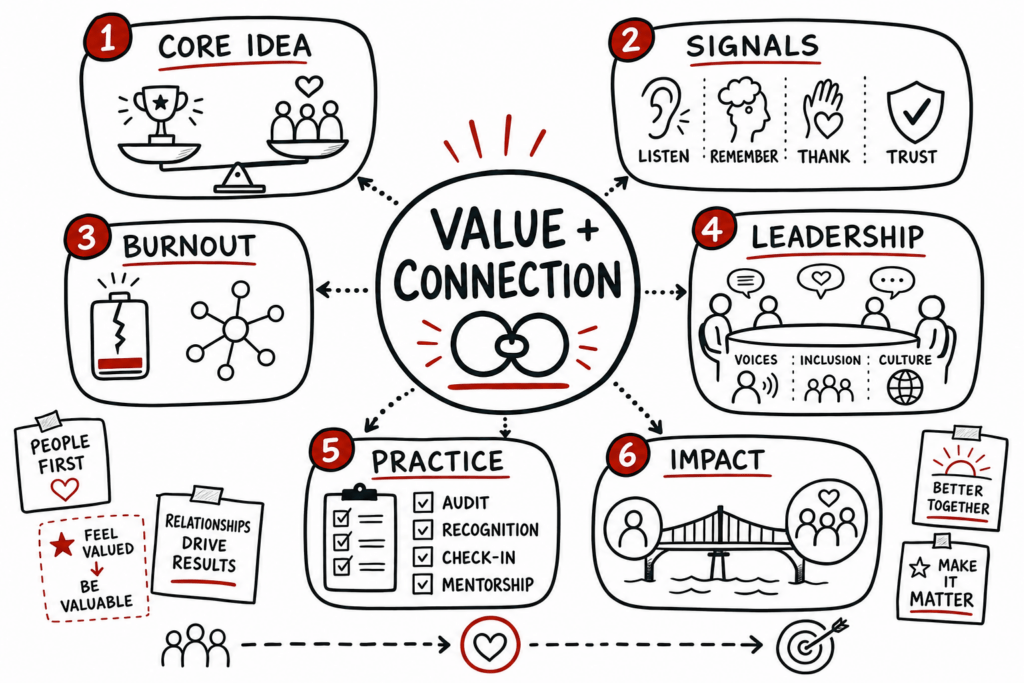
Short answer: This Mattering book summary is for high achievers who have outgrown achievement as a complete operating system. Jennifer Breheny Wallace argues that people thrive when they feel valued and when they add value to others. For leaders, founders, real estate professionals, and executives, the book is most useful as a reset: stop measuring your life only by output, status, and wins, and start building systems where people know they count.
Mattering: The Secret to a Life of Deep Connection and Purpose by Jennifer Breheny Wallace is not a tactical business book in the classic sense. It is closer to a psychological field guide for achievement cultures. The strongest idea is simple, but not soft: humans need evidence that their presence matters to other people. Without that, ambition can become a beautifully decorated form of loneliness.
Mattering book summary: the briefing version
Wallace’s core argument is that mattering has two sides. First, you feel significant to others. Second, you believe you contribute something meaningful beyond yourself. That combination is different from being admired, famous, high-performing, wealthy, or needed for your productivity. Status can raise your visibility while leaving your inner life undernourished. Mattering is more relational. It is about being seen, relied upon, and connected in ways that are not purely transactional.
This matters for leaders because many high performers confuse relevance with results. They are wanted when revenue is up, when a deal closes, when they absorb pressure, or when they keep everyone else calm. But being useful is not the same as being known. That distinction is where this Mattering book review becomes valuable for executive readers.
Wallace draws on psychology, reporting, and cultural observation to show why young people and adults alike are struggling inside achievement-first environments. The book is especially relevant in a market where burnout, disconnection, and performance anxiety are no longer personal quirks; they are leadership risks. For broader context, the American Psychological Association has long covered the relationship between stress, connection, and mental health, while business outlets such as CNBC regularly track workplace pressure, burnout, and the shifting expectations of professionals.
Who Should Read It
This is a strong fit for executives, founders, rainmakers, team leaders, parents in high-performance communities, and anyone who has achieved a lot but feels strangely underfilled by the scoreboard. It is also worth reading for real estate leaders because luxury markets reward polish, urgency, and responsiveness. Those traits can build powerful careers, but they can also train people to live as brands instead of humans.
If you are searching for a book summary for leaders, read this less as a self-help title and more as a cultural audit. It helps you notice where your company, family, or peer group may be over-indexed on achievement and under-invested in belonging.
It is also worth reading for executives who manage talented people. High performers often look fine until they do not. They may be praised constantly and still feel disposable. They may be promoted and still wonder whether anyone would miss them if the numbers dipped. Wallace gives leaders language for that hidden tension.
Core Idea
The core idea is that mattering is not the same as success. Success asks, What did I accomplish? Mattering asks, Who is changed because I am here, and who would notice if I were gone?
In psychology, mattering generally refers to the felt sense that one is important, noticed, and significant to others. So if you are asking what is mattering in psychology, the practical answer is this: it is the perception that your existence has relational weight. You are not invisible. You are not merely a function. You are valued as a person and you have a meaningful effect on the people around you.
That is why mattering and purpose are linked, but not identical. Purpose can become abstract: a mission statement, a philanthropic lane, a five-year vision. Mattering is closer to daily evidence. Did I listen closely? Did I make someone feel less alone? Did my work improve a real person’s life? Did I use my influence to create dignity, not just efficiency?
The cleanest leadership translation is this: people need to feel both valued and valuable. One without the other is unstable. If people feel valued but never useful, they may drift. If they feel useful but not valued, they burn out.
Best Takeaways
1. Achievement is a weak substitute for connection
One of the best Mattering key takeaways is that achievement can camouflage disconnection. A person can have prestige, money, and access while feeling emotionally peripheral. Leaders should take this seriously. In high-performing circles, loneliness rarely announces itself as loneliness. It shows up as irritability, overcontrol, cynicism, numbness, or the inability to enjoy wins.
2. Mattering is built in small signals
Wallace’s concept is useful because it is not limited to grand gestures. People feel they matter through repeated signals: being remembered, being consulted, being thanked specifically, being trusted with meaningful responsibility, and being seen beyond their function. For leaders, this is not about becoming sentimental. It is about precision. A vague compliment says little. A specific acknowledgment says, I see what you carried, and it counted.
3. High achiever burnout is often connection debt
The phrase high achiever burnout and connection belongs in the same conversation. Many ambitious professionals do not burn out only because they work too much. They burn out because the work becomes detached from human meaning. They keep producing, but the emotional return declines. A healthier ambition connects effort to contribution, not just external validation.
4. Leaders set the mattering climate
One of the strongest Mattering leadership lessons is that mattering can be designed into culture. Leaders decide whether people are treated as replaceable production units or as humans with judgment, context, and dignity. This shows up in meeting behavior, feedback rituals, compensation conversations, onboarding, recognition, and how mistakes are handled.
5. Impact beats image
Among the most useful Mattering strategy lessons is the shift from image to impact. In prestige-driven industries, image becomes a trap. You can spend years managing how you are perceived while neglecting the more durable question: what value are you actually creating for clients, colleagues, family, and community?
Where It Falls Short
The book’s limitation is not the concept. The concept is strong. The risk is that readers may treat mattering as a warm feeling rather than an operating principle. Some sections will feel more relevant to parents, students, or families than to executives looking for hard systems. Strategy-minded readers may want more direct tools, scorecards, or organizational frameworks.
There is also a slight danger of overcorrection. Achievement is not the enemy. Many ambitious people find genuine meaning in excellence, mastery, and competition. The better reading is not stop achieving. It is stop using achievement as your only proof of worth. That distinction matters.
For affluent professionals, the book may also understate how complex success ecosystems can be. If you lead a firm, manage investor expectations, support extended family, serve demanding clients, and carry public visibility, you cannot solve disconnection with one better dinner conversation. You need boundaries, rituals, delegation, and a more honest definition of success.
Still, the book’s value is substantial. Jennifer Breheny Wallace Mattering gives language to a problem many leaders privately recognize but rarely name: the more successful you become, the easier it is to be surrounded and unseen.
How to Apply It
Run a mattering audit
Ask three questions across your business and personal life: Who feels valued by me? Who feels used by me? Where am I performing importance instead of experiencing connection? Do not answer aspirationally. Look at calendar time, response patterns, meeting behavior, and who gets your full attention.
Replace generic praise with specific recognition
Instead of saying, Great job, say what mattered: You protected the client relationship under pressure, and that changed the outcome. Specific recognition creates evidence. Evidence builds trust.
Reconnect work to human impact
For real estate and advisory leaders, this is especially powerful. A transaction is not just a transaction. It may represent safety, legacy, mobility, identity, or a family’s next chapter. Bring that meaning back into team conversations. People sustain effort better when they can see who benefits.
Design meetings so people count
If the same three voices dominate every room, your culture is teaching people that visibility equals value. Invite quieter insight. Credit contributions publicly. Do not let speed erase inclusion. Efficiency matters, but a room where people feel irrelevant becomes expensive over time.
Separate worth from performance
This is the executive-level discipline. Hold high standards without making people feel their humanity is conditional. You can demand excellence and still communicate steadiness: Your performance needs attention, and your value here is not in question. That combination is rare, memorable, and loyalty-building.
Build personal rituals of contribution
Do not outsource mattering to titles, assets, or reputation. Create small, repeatable practices: one meaningful check-in per day, one handwritten note per week, one mentorship conversation per month, one community contribution per quarter. The point is not optics. The point is to stay human while operating at a high level.
Final Verdict
Mattering is a useful and timely read for leaders who suspect that achievement alone is no longer enough. It will not give you a business playbook in the traditional sense. It will give you a sharper lens for understanding why talented people burn out, why successful people feel isolated, and why cultures built only on performance eventually become brittle.
The best use of the book is practical: treat mattering as a leadership metric. Not a soft metric. A retention, trust, resilience, and meaning metric. If people feel valued and valuable, they bring more of themselves to the work. If they do not, even excellent compensation may not be enough to keep them engaged.
For RE Luxe Leaders readers, the takeaway is clear: luxury leadership is not only about sharper positioning, better assets, or more polished execution. It is also about building environments where clients, teams, partners, and families experience significance. That is the kind of influence that compounds.
If you want more private-briefing style reviews and strategy notes for high-performing professionals, read more RE Luxe Leaders book briefings. For a deeper look at how these ideas apply to your leadership, brand, or next chapter, book a confidential strategy call.