What Is the Squeeze Me Lemon Recipes and Art Review Verdict?
This Squeeze Me Lemon Recipes and Art review is for design-oriented executives, founders, and hosts evaluating Ruthie Rogers and Ed’s lemon-focused cookbook-art hybrid, with the strategic implication that it works best as cultural inspiration rather than a pure utility cookbook. Squeeze Me: Lemon Recipes & Art treats lemons as both ingredient and visual motif: recipes sit beside original artistic interpretations, making the book part kitchen reference, part coffee-table object. A practical KPI for this kind of lifestyle title is whether it can produce at least one repeatable hosting upgrade within 30 days; here, the likely wins are sharper seasonal menus, brighter tablescapes, and a more intentional point of view around summer entertaining. Readers wanting dense culinary instruction may find it light. Readers curating a sophisticated home, client lunch, or weekend house mood board will find more value.
Squeeze Me Lemon Recipes and Art Review: The Book Concept
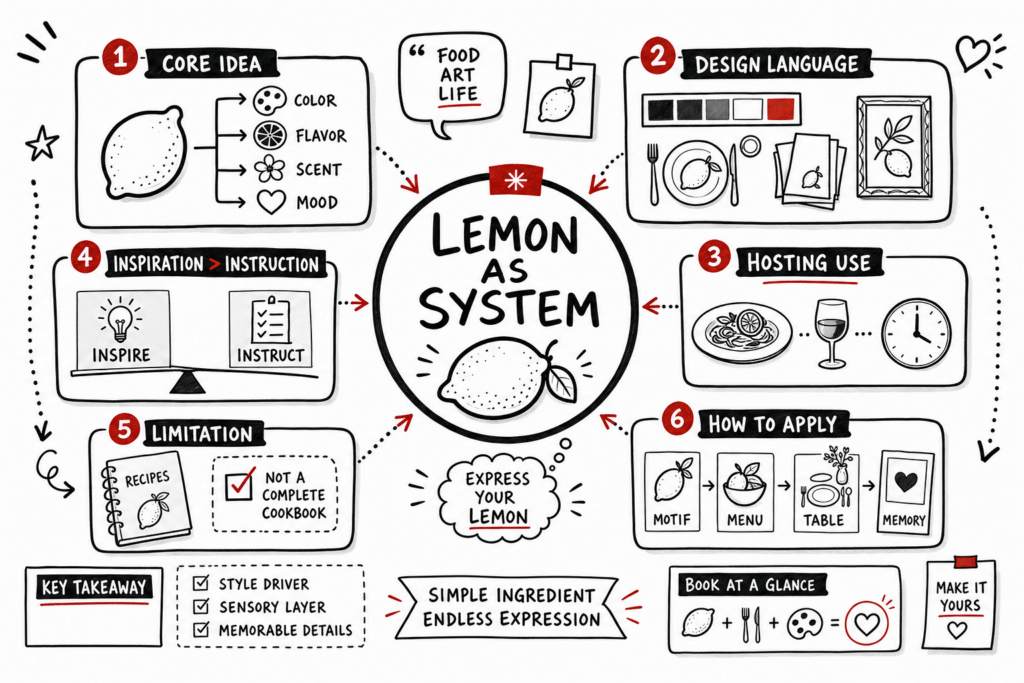
Squeeze Me: Lemon Recipes & Art is not trying to be the most exhaustive lemon cookbook on the shelf. Its more specific move is to turn one familiar ingredient into a design language. Lemon becomes flavor, color, shape, memory, scent, and social signal. That is the reason the book belongs in a lemon cookbook art book review conversation as much as in a conventional recipe roundup.
The structure appears simple: lemon recipes paired with visual interpretations. The effect is more layered. You are not just being told what to cook; you are being nudged to think about how an ingredient creates atmosphere. For a private dinner, a garden lunch, or a well-edited vacation kitchen, that matters. Hospitality at the high end is rarely about volume. It is about coherence.
This is also where the book earns its place in a design-forward cookbook review. The recipes provide the entry point, but the art gives the book its stronger identity. It asks a useful question: what if the menu, the room, the light, the objects, and the guest experience all came from the same creative cue?
Who Should Read It
This book is a strong fit for readers who care about food but also care about the environment in which food is served. If you are building a refined home library, preparing a summer house, planning low-effort but high-taste entertaining, or refreshing your personal aesthetic, Squeeze Me has a clear role.
It is especially relevant for affluent professionals who do not want lifestyle advice that feels loud, trendy, or performative. The better use case is quieter: a founder hosting investors for lunch, a principal designing a relaxed weekend with clients, or an executive couple wanting the home to feel less transactional and more alive. In that sense, this is a useful lifestyle book review for executives, because the book supports presence, taste, and cultural fluency rather than productivity theater.
It also belongs on high-end summer reading list books roundups because it is seasonal without being disposable. Lemons are an easy symbol of summer, but the book seems more interested in restraint than cliché. If your taste runs toward edited interiors, long lunches, and objects with a point of view, this will likely land.
For readers wanting technical depth, nutritional analysis, meal-prep systems, or restaurant-level recipe development, this may not be the right primary purchase. It is not a managerial manual for the kitchen. It is an aesthetic prompt with culinary utility.
Core Idea
The core idea is that a single ingredient can become a creative operating system. Lemons are treated as more than acid and aroma. They become a way to organize color, appetite, art, conversation, and seasonal ritual.
That is the useful insight beneath the surface. Most people entertain by accumulating: more courses, more flowers, more bottles, more decorative noise. Squeeze Me suggests a better method: choose one strong motif and let it discipline the choices. Citrus can shape the aperitif, the salad, the dessert, the table setting, the art reference, and even the mood of the invitation.
This cookbook and art book summary is therefore straightforward: the book uses lemon recipes and artworks to create an integrated sensory world. It is not just about what lemons can do in a dish. It is about what a lemon can do for a room, a gathering, and a memory.
That makes it more valuable than a novelty concept, provided the reader understands the assignment. You are not buying only instructions. You are buying a visual and culinary vocabulary.
Best Takeaways
1. A narrow theme can make entertaining feel more expensive
The strongest Squeeze Me Lemon Recipes and Art key takeaways start with focus. Luxury often comes from subtraction. A lemon-led lunch can feel more elegant than a table loaded with unrelated gestures because the eye understands the story quickly. Yellow, green, white, glass, linen, olive oil, fish, herbs, sorbet, sharp cocktails: the palette is already doing half the work.
2. Food and art can share the same brief
The book’s pairing of recipes and artistic interpretations encourages a more modern kind of hosting. You are not separating menu from decor from conversation. You are creating one experience. This is the same logic behind good interiors coverage in places like Architectural Digest: the most memorable spaces have a governing idea.
3. Seasonal living is a leadership skill, not just a leisure preference
For executives, this may sound soft until you test it. Leaders who can create calm, generous, memorable environments often build stronger relationships. A thoughtful lunch can do what another deck cannot: lower defenses and create shared context. An entertaining inspiration book is useful when it helps you host with less anxiety and more intention.
4. The book encourages sensory intelligence
Sharpness, fragrance, color, bitterness, sweetness, texture: lemon is a compact education in contrast. That is useful beyond cooking. Sensory intelligence improves taste decisions in homes, offices, events, gifting, and brand expression. If your personal or professional world depends on perception, this kind of attention compounds.
Where It Falls Short
The main limitation is also the premise. A concept this visually led can feel slight if you approach it like a comprehensive cookbook. Readers who measure value by recipe count, technique density, substitutions, storage guidance, or weeknight practicality may come away wanting more.
There is also a risk of over-aestheticization. Beautiful food books can become objects people admire but do not use. The test is whether the book moves from table to kitchen. If it only sits in a stack beside candles, its value is decorative. That may still be acceptable for some buyers, but it should be named honestly.
Another caveat: author and publication details should be verified before formal cataloging or citation. Ruthie Rogers has an established public presence, and readers can cross-check biographical context through her official site at RuthieRogers.co.uk. For a final purchasing decision, confirm edition, credits, and format with the retailer or publisher listing.
As a Squeeze Me review, the fair verdict is this: the book likely delivers more inspiration per page than instruction per page. That is not a defect if you know what you are buying. It is a problem only if you expected a technical citrus encyclopedia.
How to Apply It
Use the one-motif rule
Take the book’s central device and apply it to your next gathering. Choose one motif: lemon, fig, tomato, olive, sea salt, linen, or garden herbs. Then let that motif govern five decisions: drink, starter, main accent, table color, and take-home detail. This prevents visual clutter and reduces decision fatigue.
Build a 90-minute executive lunch
A practical business application: design a 90-minute summer lunch for four to six people. Keep the menu bright, not heavy. Use a citrus-forward aperitif, a simple fish or vegetable dish, a green salad, and a lemon dessert. Your KPI is not culinary applause; it is whether guests stay present, conversation deepens, and no one feels managed. Good hosting creates ease.
Create a seasonal home brief
Use Squeeze Me as a prompt for a summer environment edit. Remove heavy objects. Bring in glass, pale ceramics, linen, fresh greenery, and one controlled accent color. Place the book where it can actually be used: kitchen island, breakfast room, pool house, or guest suite. A design-forward object should earn its space.
Turn recipes into relationship assets
If one recipe becomes a house signature, it can become part of your social identity. That is not about showing off. It is about making people feel held by something consistent. The best hosts are not the most elaborate; they are the most recognizable in their care.
Final Verdict
Squeeze Me: Lemon Recipes & Art by Ruthie Rogers and Ed is best understood as a refined hybrid: part cookbook, part art object, part seasonal lifestyle cue. It will satisfy readers who want beauty with some practical use, especially those who think entertaining is a form of cultural strategy. It will frustrate readers who want a high-volume, technique-heavy recipe manual.
The book’s most transferable lesson is focus. Pick a motif. Edit around it. Let food, art, and setting speak the same language. For ambitious professionals, that is the real value: not lemon recipes alone, but a sharper way to design experiences people remember.
For more calm, practical strategy briefings on books, lifestyle, leadership, and luxury decision-making, read the latest RE Luxe Leaders reviews—or book a confidential strategy call when you want the briefing tailored to your next move.