
America the Imagination of a Nation Review: Leader Briefing
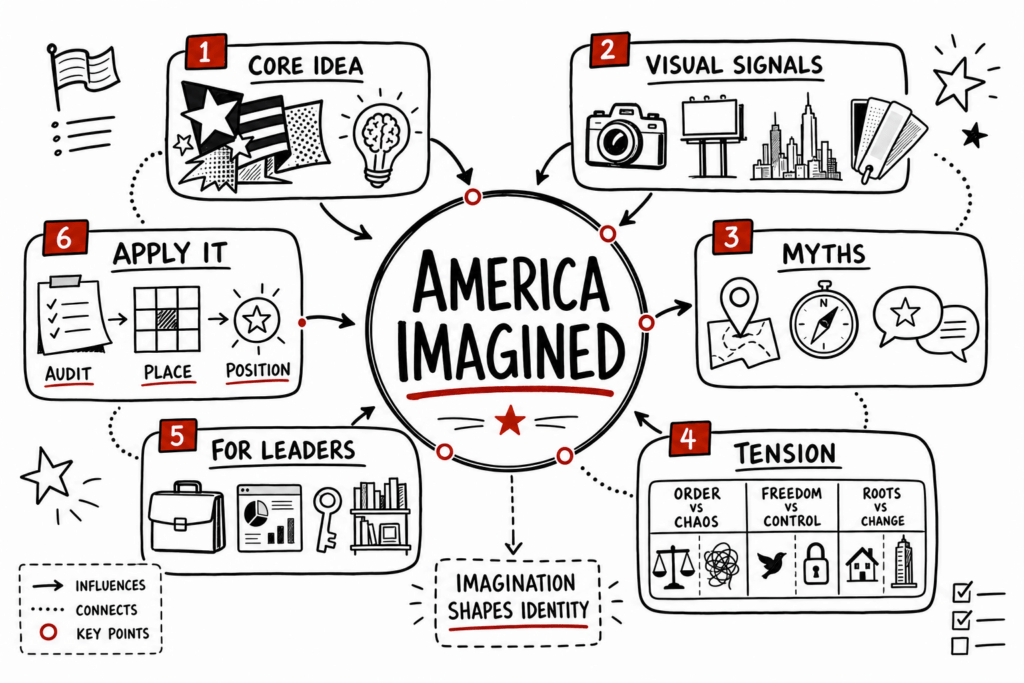
Short answer: America: The Imagination of a Nation, presented in the source as an Assouline volume created with Joel Stein, is best read as a visual essay on how a country pictures itself. It is useful to leaders who work with place, brand, identity and culture because it asks what symbols people admire, repeat and reinterpret.
This is not a comprehensive political history or an operating manual. Its value is the pattern-recognition exercise: markets, cities, brands and institutions are shaped by stories people want to believe about the future.
America: The Imagination of a Nation review: What the Book Is Really Doing
The book is built as a curated visual exploration rather than a linear chronology. It moves through images, themes, icons, moods and cultural signals to ask how American identity is pictured across time.
That distinction matters. A conventional history asks what happened. This book is more interested in what a society believed about itself while events were happening. For a leader, that makes it a prompt for examining narratives behind a market or place, not a source for a single conclusion.
Book Overview
The book presents the United States through recurring images and self-created myths. The visual storytelling emphasizes symbols, aspirations, contradictions, cultural artifacts and the emotional architecture of national identity.
The physical object is part of the experience. It is designed to be held, displayed and revisited, which makes it suitable for a library, office or client lounge when the reader values visual reference alongside argument. Read it in short sessions and notice what repeats, what feels commercialized and what remains unresolved.
Core Idea
The core idea is that a nation is also an imagination. A culture creates images of freedom, prosperity, reinvention, glamour, technology, abundance or individual destiny, then lives inside those images until the story changes.
Some narratives uplift, some distort and some exclude. Leaders should study how a symbol operates before adopting it. In real estate, hospitality or brand work, a property may be positioned through privacy, coastal ease, urban ambition, heritage, creative freedom or wellness. Naming the story helps the team test whether the visual and verbal choices actually support it.
Who Should Read It
The strongest fit is a reader who treats cultural fluency as part of professional judgment: founders, developers, family-office principals, luxury real-estate leaders, advisers, brand builders and executives who shape environments.
It also suits someone building a professional library with room for place, memory and meaning alongside management books. Skip it if you need academic history, a deep policy argument or step-by-step business guidance. This is a visual cultural essay.
Best Takeaways
1. Culture is strategy before it becomes strategy
Images a society repeats can shape what it builds, buys, funds and protects. Architecture, advertising, entertainment, travel, fashion and interiors may reveal a shift in desire before a formal strategy document does.
2. National identity is never static
The book treats America as an evolving self-portrait. Leaders can use that lens to ask whether an aspirational message has aged, whether a nostalgic cue now needs context or whether a once-fringe idea is entering the audience’s mainstream.
3. Visual intelligence matters
Executives learn to read numbers, contracts and organizational charts, but clients and markets also respond to scale, material, color, setting, heritage, polish and restraint. Visual taste is communication. The book is a useful reminder to audit the images around a decision, not just the words.
4. America is both aspiration and contradiction
The volume’s subject contains freedom and control, abundance and anxiety, reinvention and nostalgia, individualism and mass culture. A strong brand or place can hold complexity without losing clarity. A simple story may be easier to repeat, but it can age poorly.
Where It Falls Short
The book’s elegance and curation can feel more suggestive than analytical. A reader looking for deep sourcing, dense argument or an extended critique of American power may want a companion text.
A premium visual treatment can illuminate pain, exclusion, violence, wealth, mythmaking and spectacle, but it can also make difficult subjects feel safer than they are. Read the images as prompts, bring additional context and do not treat a curated view as the final word.
How to Apply It
Use the book as a cultural audit. Ask which versions of America still hold power with your clients, investors or audience, which are fading and which are being reinterpreted by younger or more global buyers.
For a property or hospitality project, name the story the place is telling: frontier privacy, coastal ease, urban ambition, heritage, creative freedom or another evidence-based position. Then check whether the photography, materials, language and guest experience support that story.
For a brand, audit visual signals before adding more content. Record what the current image system communicates, what audience it assumes and which contradictions it leaves unaddressed. Let the audit produce a small test rather than a universal rebrand.
For leaders, use one image or passage to open a conversation about identity, place and the expectations attached to the organization. Distinguish the book’s interpretation from your own application, and document the question that remains open.
Is America: The Imagination of a Nation Worth Reading?
It is worth reading when you want a refined visual prompt for cultural fluency, place and identity. It is less useful when you need a sourced national history or an operational playbook.
Approach it slowly, notice the stories it makes visible and test those observations against the people and market in front of you. The best takeaway is a better question about what a symbol is doing before you ask it to carry your strategy.
You can request a complimentary one-hour conversation with a senior advisor who is an experienced operator. Talk through your next move when a place, brand or leadership decision needs a more careful conversation about meaning.