


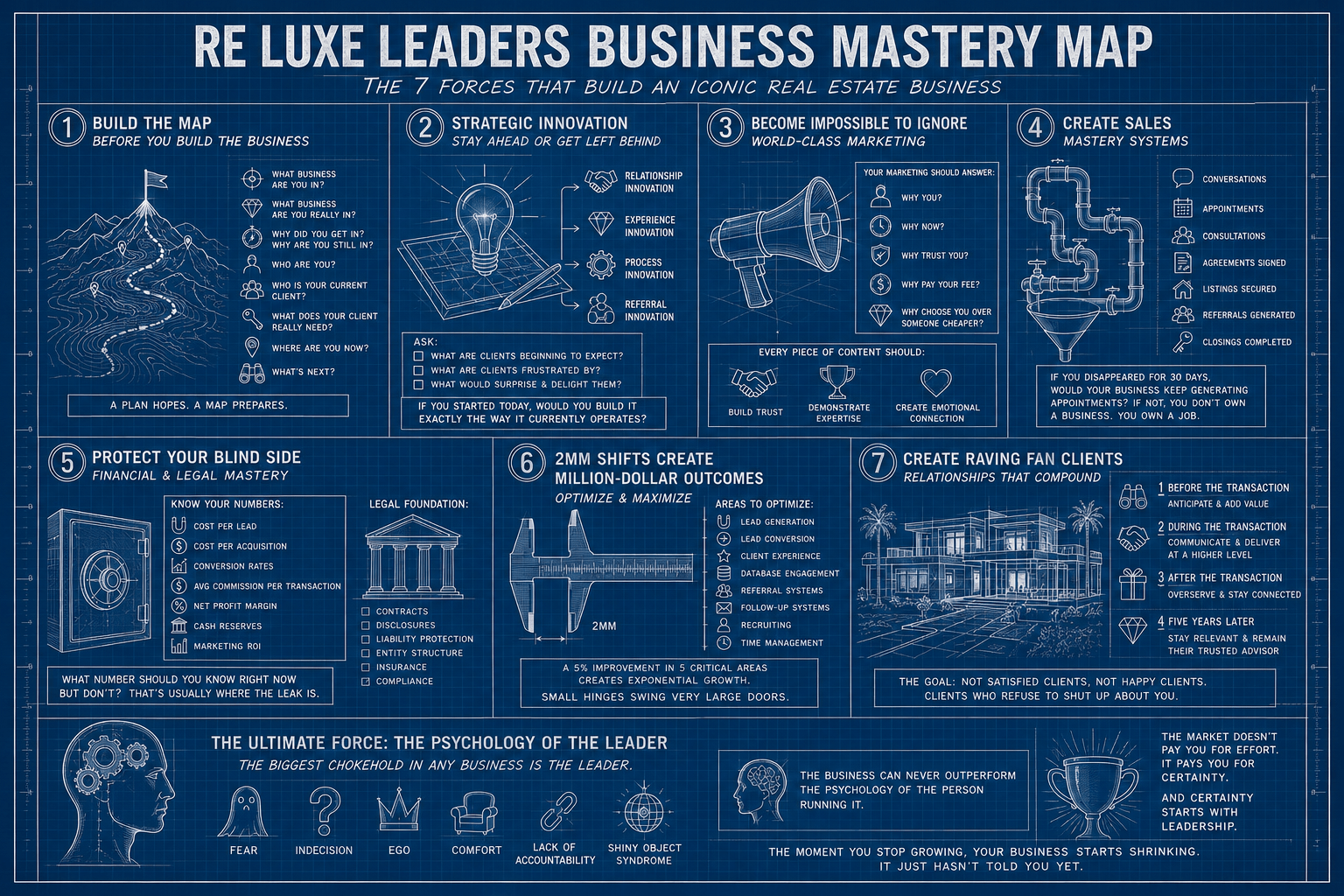
Force #1: Build the Map Before You Build the Business Most agents have a business plan. Few have a business map. A plan tells you what you hope happens. A

Stop Begging for Deals: 9 Real-World Tips for Negotiating Concessions Master nine real-world strategies for negotiating concessions. Stop begging for discounts and start controlling the deal with confidence. Every deal

Fall Staging That Sells: 7 Luxury Looks on a Budget Discover 7 expert-approved fall staging tricks to make your listings feel high-end, without spending big. Smart, moody, and tailored for

Most brokerages do not fail from lack of ambition. They fail because growth exposes weak economics, inconsistent management cadence, fragmented data, and undocumented exceptions. In a rising market, heroic effort

Transaction volume can conceal a weak operating model. A brokerage may add agents, sides, and gross commission income while producing less cash because compensation, lead acquisition, technology, and support costs

Most brokerage owners still manage by lagging indicators: closed units, GCI, market share, and year-over-year volume. Those numbers matter, but they report what already happened. By the time they reveal

Most brokerage dashboards explain what already happened. GCI, closed units, agent count, and recruiting volume are useful records, but they do not tell an owner whether the firm is becoming

Top producers rarely stall because the market withheld opportunity. They stall because the business underneath production cannot absorb more demand without creating more noise. Leads increase activity, but they do

Top-producing brokerages do not break because agents stop working. They break because the business depends on too many undocumented decisions, inconsistent standards, and market conditions the owner cannot control. In