



Volume is inconsistent. Lead costs are higher. Splits and caps haven’t moved enough to protect margin. That is the 2026 reality across top teams and boutiques. The firms that hold

Most brokerage leaders stare at dashboards packed with lagging data—closed volume, past GCI, last month’s headcount. By the time those numbers move, your margin already has. The fix isn’t more

Top performers don’t struggle with lead volume—they struggle with repeatable execution. Revenue grows; margin wobbles. Systems lag behind demand. At a certain threshold, personality and hustle stop working. What scales

Margin is the first casualty when a brokerage grows on personality instead of process. Rising lead costs, volatile splits, and regulatory risk don’t care how many plaques are on the

Most brokerages don’t fail for lack of ideas. They fail because strategy, people, systems, and financials don’t connect cleanly. Headcount grows, tech stacks expand, and yet EBITDA stays flat. If

Most firms don’t have a revenue problem—they have a margin architecture problem. Split wars, tech sprawl, and recruiting churn erode profitability faster than market cycles do. If your net falls

Churn is a silent tax on your P&L. Recruiting can backfill headcount, but it rarely replaces lost production velocity, cultural continuity, or the true cost of re-ramping. If you’re still
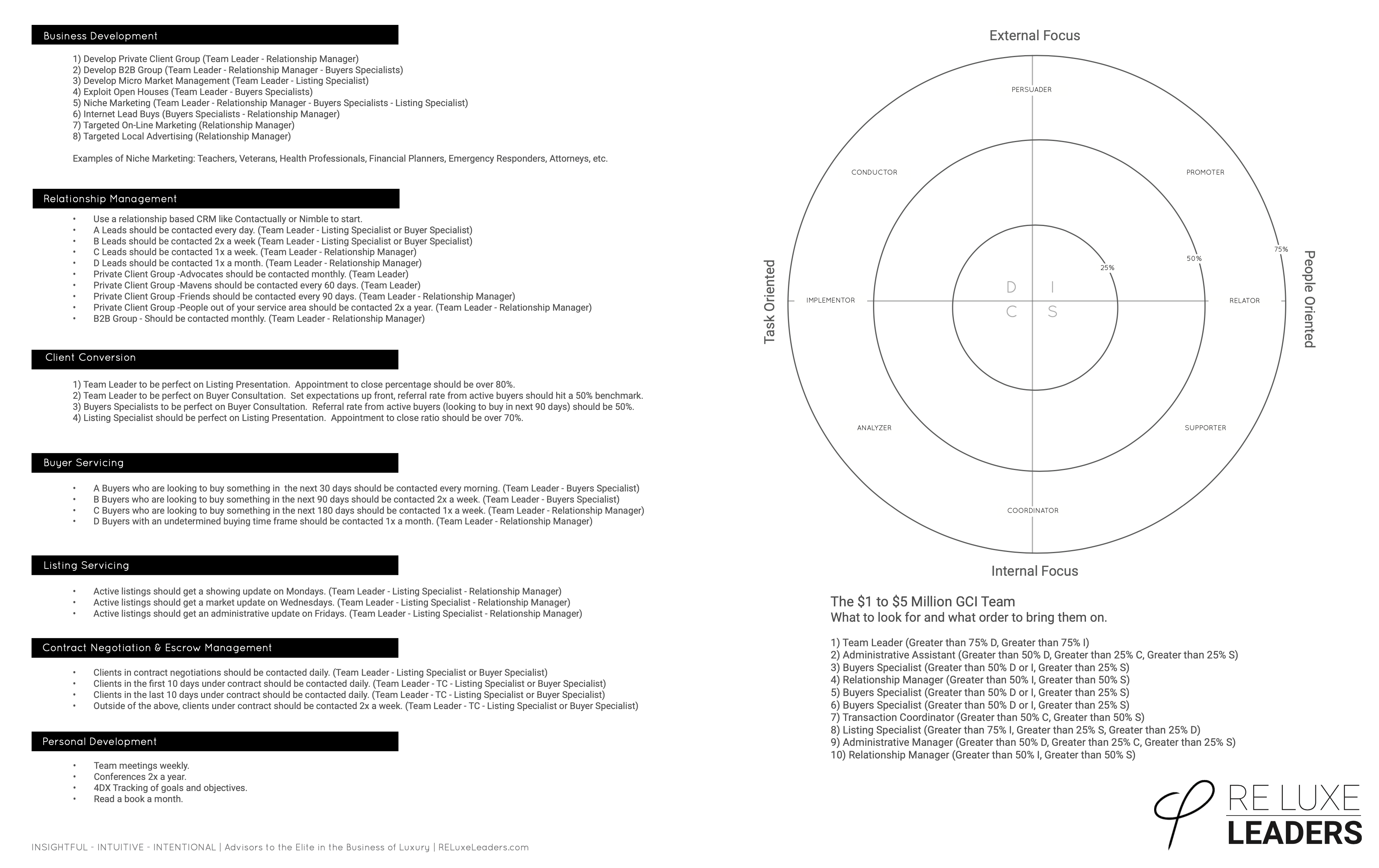
The Ultimate Real Estate Team Structure Blueprint is your key to boost marketshare and efficiency while driving more profit and better quality of life. Good teams are dominating the market.

Growing with teams can be an extremely effective way to boost profitability, marketshare and efficiency. Good teams are dominating the market. The 80-20 rule skews closer to 90-10 in real

Top firms don’t outwork the market—they out-operate it. In a margin-tight cycle, most expansion failures trace back to one cause: an undefined or inconsistent brokerage operating model. More leads, more