February 18, 2025
February 2025 luxury real estate report
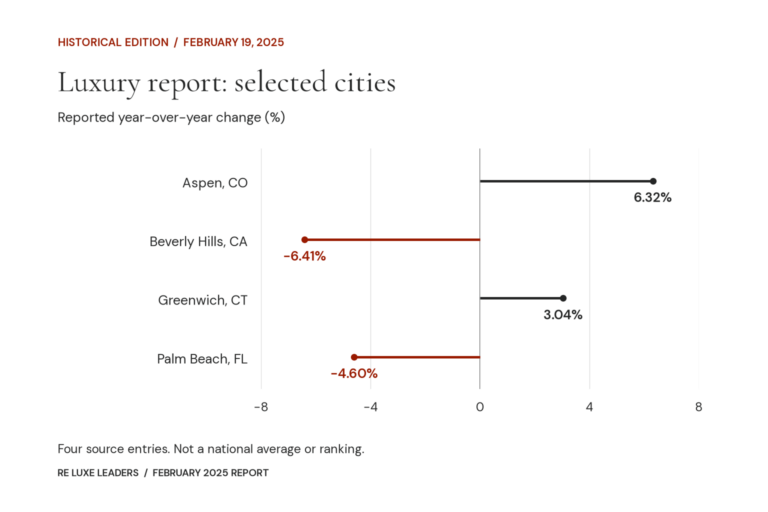
Read selected city-level figures from the February 2025 luxury real estate report, with source-page references and the complete original PDF.

RE Luxe Leaders
February 18, 2025
Read selected city-level figures from the February 2025 luxury real estate report, with source-page references and the complete original PDF.
February 18, 2025
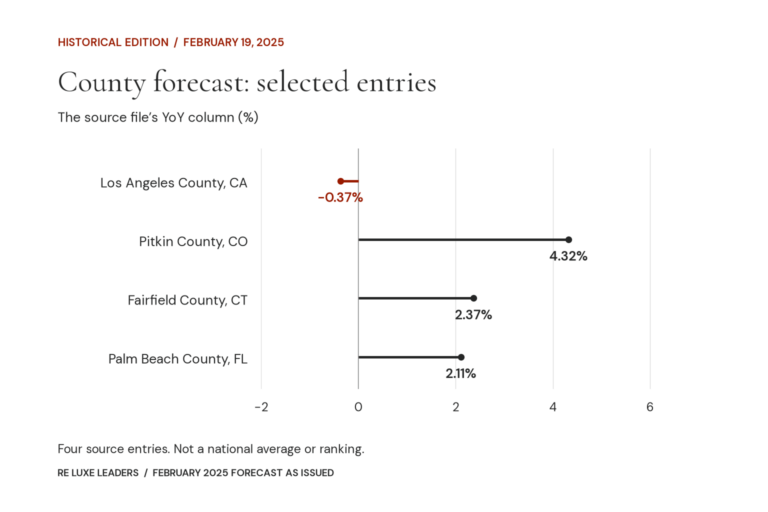
Read the February 2025 national real estate forecast as issued, with selected county entries, source-page references and the original PDF.
February 18, 2025
A brokerage dashboard should reveal whether the firm is becoming more profitable, resilient and serviceable. Six KPIs cover revenue per productive agent, contribution per transaction, staff leverage, concentration, pipeline velocity,
February 6, 2025
A real estate operating system turns strategy into repeatable execution. Six components connect decision rhythm, revenue intelligence, talent capacity, origination-to-close playbooks, financial controls and risk so a growing firm can
February 6, 2025
A brokerage scales more reliably when it standardizes before it adds volume. Seven systems connect strategy, revenue operations, talent, financial discipline, data, client experience and governance to a 90-day operating
February 6, 2025
Brokerage margin often leaks between meetings: decisions stall, forecasts drift and accountability softens. Six cadence systems place pricing, economics, capacity, forecast hygiene and client experience on a predictable clock. What
January 16, 2025
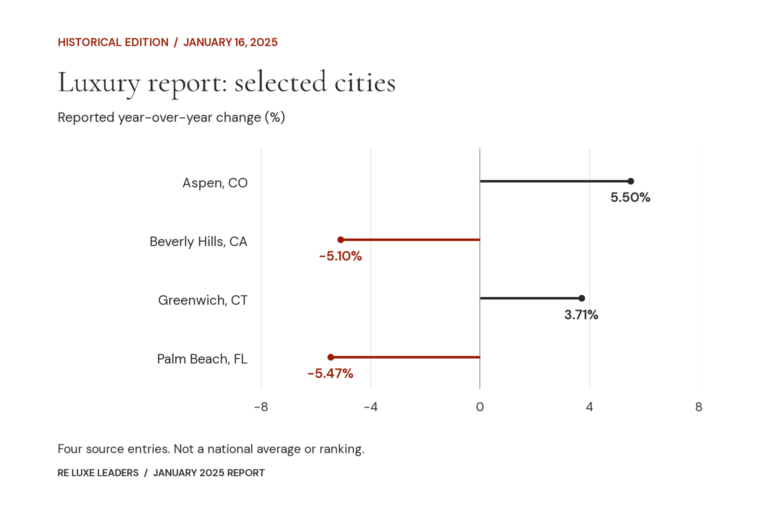
Read selected city-level figures from the January 2025 luxury real estate report, with source-page references and the complete original PDF.
January 16, 2025
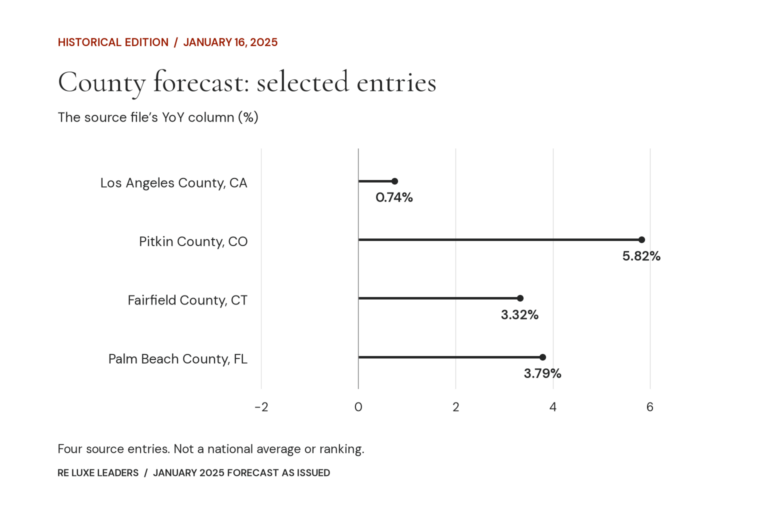
Read the January 2025 national real estate forecast as issued, with selected county entries, source-page references and the original PDF.
January 2, 2025
Assess tailored real estate coaching by the decisions, evidence, responsibilities and follow-through the proposed engagement includes.
January 2, 2025
Predictable revenue comes from an operating cadence that keeps pipeline, friction, forecast, finance, talent and client quality visible. Seven routines give a team a repeatable rhythm for the decisions that